Decision Makers: Inside Al Baraka’s evolution under Hazem Hegazy
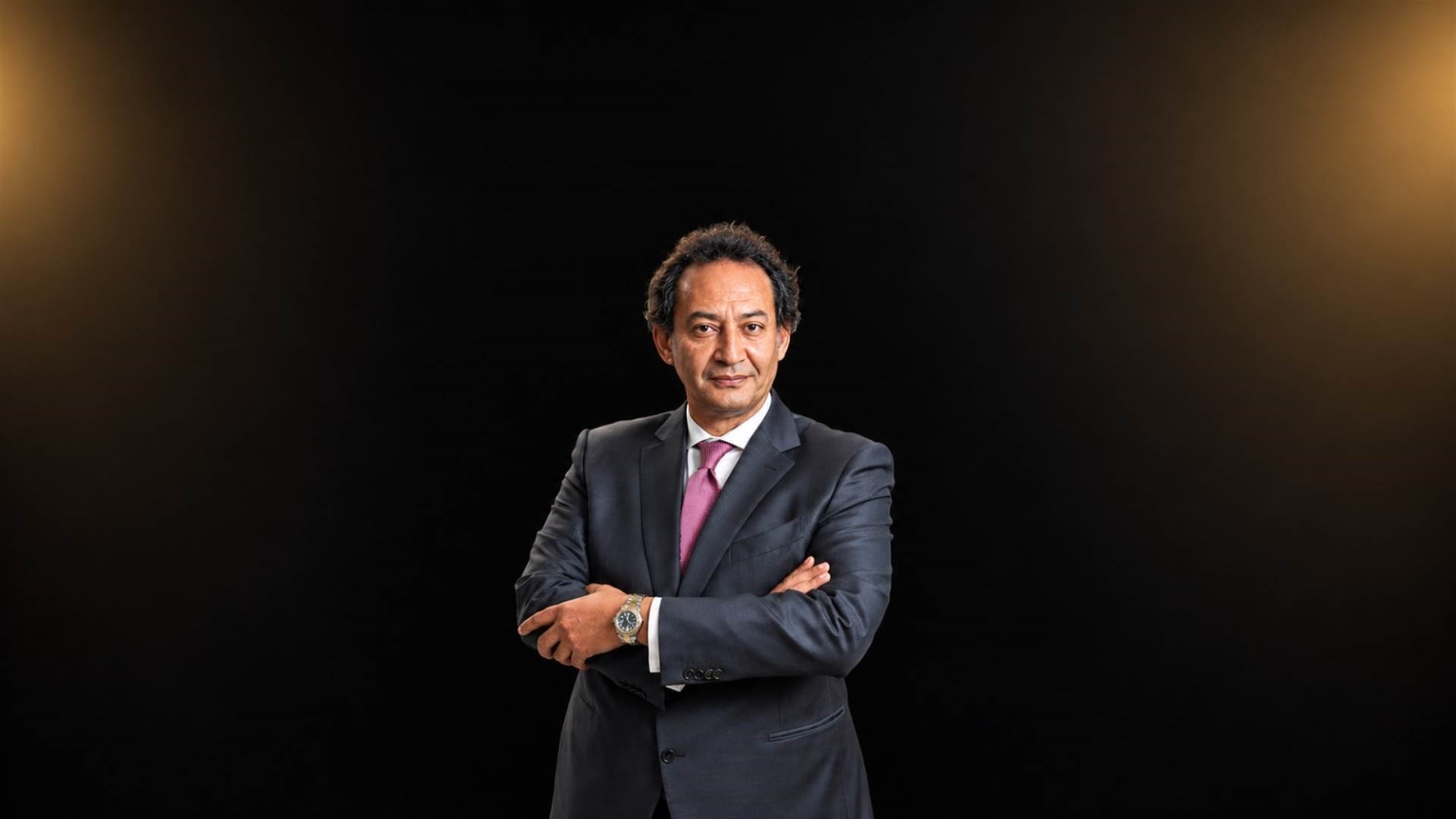
In the banking sector, the measure of a leadership tenure lies not in its duration but in the depth of transformation it delivers.
While some periods of growth merely expand the balance sheet, others fundamentally reshape the business, strengthening the bank’s capacity to attract deposits, extend financing, and generate sustainable earnings.
The true measure of any leadership period therefore extends beyond the figures themselves to what they reveal about the underlying changes in the bank’s operations.
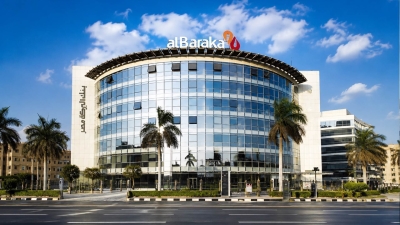
This distinction is particularly relevant to Al Baraka Bank Egypt under Hazem Hegazy, who assumed leadership in September 2021.
The past five years offer a broader perspective on the bank’s trajectory, extending beyond financial growth to the structural changes in its banking activities and income sources.
A broader funding base, with retail deposits leading growth
Financial position expansion has been among the most significant developments in Al Baraka Bank Egypt’s performance. Total assets rose 96.9 per cent to EGP 151.60bn at end-June 2026, from EGP 77bn at end-June 2021, an increase of EGP 74.61bn.
Deposit growth was a major driver of this expansion, with customer deposits rising 88.4 per cent to EGP 127.48bn at end-June 2026, from EGP 67.67bn at end-June 2021, an increase of EGP 59.81bn.
Yet the significance of this growth extends beyond the volume of additional resources. Equally important is their composition, as the deposit structure plays a central role in determining the nature of a bank’s funding base.
Retail deposits emerged as the principal growth driver, surging 167.3 per cent to EGP 89.62bn at end-June 2026, from EGP 33.52bn at end-June 2021, an increase of EGP 56.10bn.
Corporate deposits, meanwhile, grew 10.9 per cent to EGP 37.85bn at end-June 2026, compared with EGP 34.15bn five years earlier, adding EGP 3.71bn.
The disparity reveals a shift in the composition of funding sources, with retail customers accounting for an increasingly significant share of deposit growth.
The importance of this development lies not only in the additional resources generated by a larger retail deposit base but also in the diversification of funding sources.
This provides a broader base for financing different banking activities, subject to the bank’s requirements and its ability to balance resource deployment with liquidity management.
financing expands faster than deposits
While deposit growth strengthened Al Baraka’s funding base, the next measure of performance was its ability to translate those resources into financing activity.
The shift extended beyond an increase in financing volumes to a faster pace of growth relative to deposits, reflecting a change in how the bank deployed its available resources.
Customer financing rose from EGP 22.42bn at end-June 2021 to EGP 83.13bn at end-June 2026, representing growth of 270.8 per cent and an increase of EGP 60.71bn.
The expansion lifted the loan-to-deposit ratio from 33.13 per cent to 65.21 per cent over the same period, placing Al Baraka at the top of First Bank’s ranking of EGX-listed banks by loan-to-deposit ratio at end-June 2026.
The significance of this development lies in the bank’s increased allocation of customer deposits to financing activities, broadening its lending role and creating greater opportunities to generate income from its core business.
A higher deployment ratio, however, is not an objective in itself. Its economic value depends on the bank’s ability to generate adequate returns from financing while maintaining sufficient flexibility to manage liquidity and the risks associated with expansion.
Corporates drive growth as retail financing accelerates
A fuller assessment of credit expansion requires examining more than the overall portfolio size. The distribution of financing reveals which activities absorbed the additional resources and how broadly the bank expanded its customer base.
Corporate financing, including financing for small economic activities, rose 214.2 per cent to EGP 63.18bn at end-June 2026, from EGP 20.11bn at end-June 2021, an increase of EGP 43.07bn.
Corporates consequently accounted for the largest share of the absolute increase in the financing portfolio, reflecting their continued importance in the bank’s lending activities.
Retail financing, meanwhile, recorded substantially faster growth, surging 765.5 per cent to EGP 19.94bn at end-June 2026, from EGP 2.30bn at end-June 2021, an increase of EGP 17.64bn.
Credit quality faces the test of expansion
Growth in the credit portfolio alone is insufficient to assess the quality of expansion. A comprehensive evaluation must also consider changes in the associated level of risk.
Non-performing loan (NPL) indicators are therefore essential to assessing the bank’s ability to expand financing while maintaining asset quality.
Against this backdrop, Al Baraka’s non-performing loan (NPL) ratio provides an important measure of its risk management performance over the past five years.
The ratio declined to 4.47 per cent at end-June 2026, from 4.93 per cent at end-June 2021, an improvement of 0.46 percentage points, despite the substantial expansion in customer financing.
The development indicates that Al Baraka absorbed significant credit growth without a deterioration in its NPL ratio, suggesting a degree of balance between business expansion and risk management.
More importantly, portfolio growth was not accompanied by a higher NPL ratio, although the improvement points more towards maintaining financing quality than achieving a fundamental strengthening of credit quality.
Business expansion drives earnings, income growth
Profitability indicators reveal another dimension of Al Baraka’s development, with net profit increasing 198.4 per cent to EGP 1.85bn in H1 2026, from EGP 620.62mn in the corresponding period of 2021, an increase of EGP 1.23bn.
The growth was primarily supported by a 193.8 per cent increase in net interest income, which reached EGP 3.96bn in H1 2026, compared with EGP 1.35bn in H1 2021.
Net fee and commission income also rose sharply, increasing 387.8 per cent to EGP 558.45mn in H1 2026, from EGP 114.48mn in the corresponding period of 2021.
Returns reveal contrasting trends in assets and equity
An assessment of profitability cannot rest on net profit growth alone.eturn ratios provide an additional perspective on earnings relative to the asset and equity bases, and the two measures do not necessarily move in the same direction.
Return on average assets (ROAA) increased to 2.49 per cent in H1 2026, from 1.63 per cent in the corresponding period of 2021, an improvement of 0.86 percentage points.
Return on average equity (ROAE), by contrast, edged down to 23.24 per cent in H1 2026, from 23.56 per cent in H1 2021, a decline of 0.32 percentage points.
Branch network expansion broadens geographic reach
Al Baraka Bank Egypt also expanded its branch network to 43 branches, alongside two electronic branches, at end-June 2026, from 32 branches at end-June 2021.
The addition of 11 branches represented growth of 34.4 per cent, reflecting the expansion of the bank’s operating infrastructure.
Five years: From expansion to sustainable growth
Al Baraka’s performance under Hazem Hegazy reflects an expansion in business scale that has extended across several dimensions of its banking operations.
Yet a larger business base also presents a more complex challenge. Sustaining growth requires disciplined management of resources and risks, ensuring that financing expansion does not compromise asset quality and that higher profits remain supported by efficient resource deployment and sustainable returns.
The significance of Hegazy’s five-year tenure, therefore, lies in establishing a larger business base for the bank’s operations. The enduring value of that progress will depend on Al Baraka’s ability to build upon it.
Growth in banking institutions is not defined by balance-sheet expansion alone, but by the extent to which that expansion translates into greater operational efficiency, sustainable returns, and a more firmly established competitive position in the Egyptian market.