First Advice: Faisal Islamic Bank loses second place after ceding top spot to ADIB Egypt
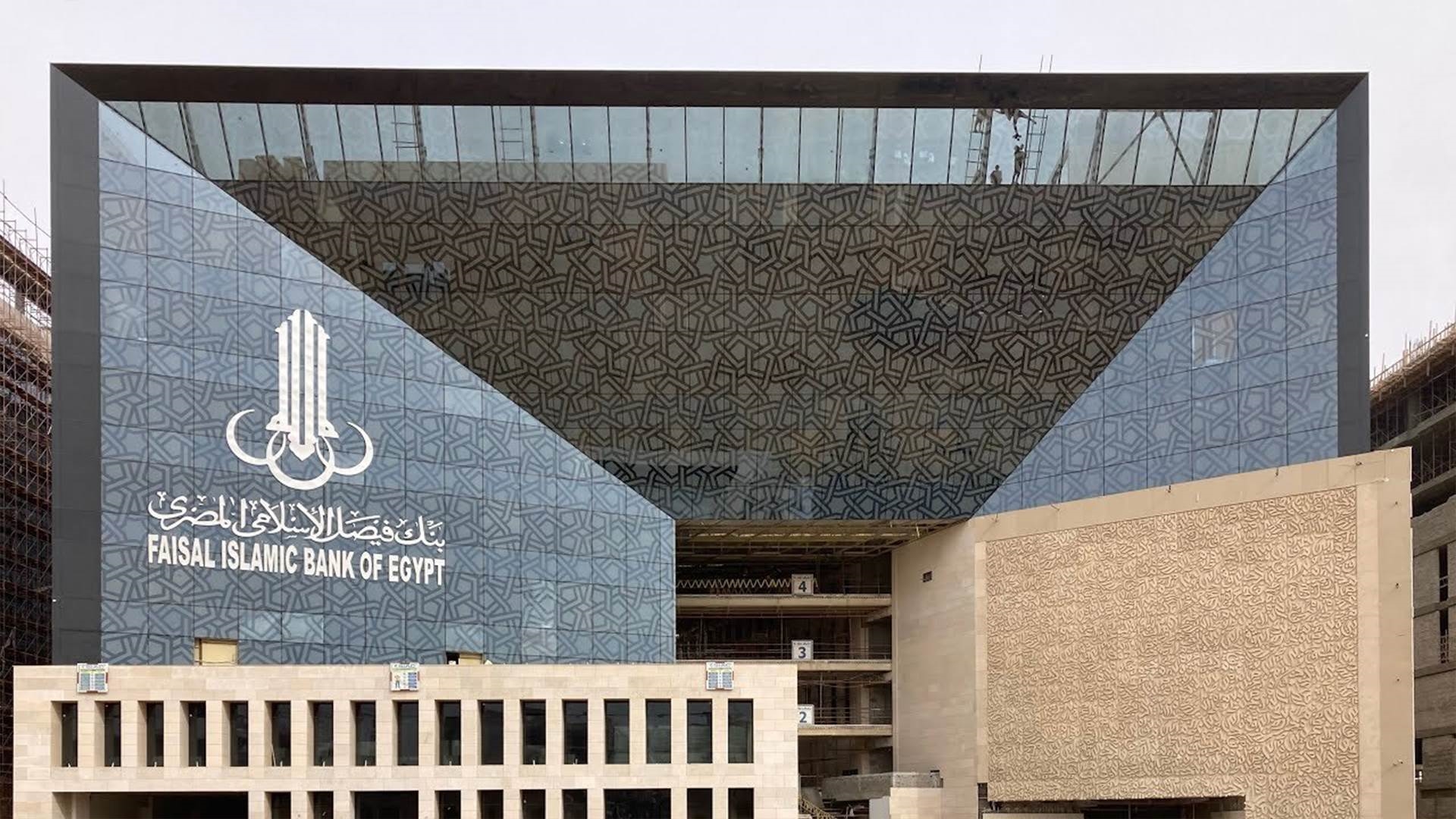
For decades, Faisal Islamic Bank of Egypt was more than a Sharia-compliant banking institution. It was the most prominent name in Egypt’s Islamic banking industry, benefiting from its first-mover advantage and accumulated expertise as the country’s first fully fledged Islamic bank.
Since opening its doors to the public in 1979, following nearly five years of consultations over the establishment of Egypt’s first Islamic bank, Faisal Islamic Bank has built a distinctive banking model that attracted a broad segment of customers seeking Sharia-compliant products and services. It also helped bring new customer segments into the banking sector that had previously avoided conventional banks.
The bank’s influence extended beyond its own growth. The success of its model encouraged Islamic banking groups to enter the Egyptian market, while several conventional banks launched Islamic banking branches. Over time, this transformed the sector from a market with a limited number of players into a broader and more diversified industry competing for customers, deposits, financing and Sharia-compliant investments.
For decades, Faisal Islamic Bank maintained its leading position, supported by its first-mover advantage, long experience in Islamic banking and an established customer base.
That equation, however, has begun to change more visibly in recent years as the market has evolved, competition has intensified and new players have emerged with greater capacity to expand, invest in technology and develop products.
The most significant turning point came in September 2024, when Abu Dhabi Islamic Bank – Egypt (ADIB Egypt) overtook Faisal Islamic Bank to lead Egypt’s Islamic banking market for the first time, before further consolidating its position in subsequent periods.
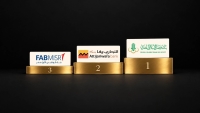
The competitive landscape shifted further as Banque Misr’s “Kenana” Islamic banking branches caught up with Faisal Islamic Bank in second place. At end-June 2026, the two recorded the same business volume, sharing the runner-up position among Islamic banking service providers in Egypt.
FirstBank had previously highlighted the narrowing gap between Faisal Islamic Bank and Banque Misr’s “Kenana” Islamic banking branches in a report published on 8 June, when the difference had fallen to about EGP 2 billion.
June 2026 data illustrate the extent of the shift. ADIB Egypt led the Islamic banking market with business volume of about EGP 412 billion, accounting for 29.5 per cent of the industry total. Faisal Islamic Bank and Banque Misr’s Islamic banking branches followed in second place, each with business volume of about EGP 281 billion and a 21 per cent market share.
The significance of these figures extends beyond the rankings themselves. Growth rates during the first half of 2026 point to a widening difference in expansion momentum. ADIB Egypt's business volume grew 18.7 per cent, compared with 11.5 per cent for Banque Misr’s Islamic banking branches and 8.9 per cent for Faisal Islamic Bank.
This suggests that Faisal Islamic Bank’s challenge is no longer limited to the loss of market leadership. The greater concern is the slower pace of growth relative to its key competitors, particularly as the number of institutions operating in Islamic finance continues to expand and their ability to attract new customer segments increases.
What happened to Faisal Islamic Bank?
Faisal Islamic Bank’s changing market position cannot be attributed to a single factor. Rather, it appears to reflect a combination of challenges associated with the evolution of banking competition, particularly the pace of digital transformation, product development, talent acquisition and the growing number of competitors.
Digital transformation has become one of the main forces reshaping banking competition. In Egypt, technology is increasingly influencing customers’ choice of bank rather than serving merely as an additional channel through which services are delivered.
Customers no longer look only for products that comply with Islamic Sharia principles. They also increasingly value speed, remote access, efficient mobile applications and digital platforms, ease of use and seamless integration across banking channels.
Against this backdrop, Faisal Islamic Bank appears not to have advanced at the same pace as some competitors in developing its digital infrastructure and electronic services. This may have constrained its ability to keep up with changing customer expectations, particularly among younger customers for whom technology has become a core measure of banking quality rather than an added feature.
The importance of technology extends well beyond service delivery. It is also central to expanding the customer base, reducing service costs, improving the user experience, analysing customer behaviour and developing products more closely aligned with customer needs.
Falling behind in digital transformation can therefore affect not only service quality, but also a bank’s ability to attract customers, improve operational efficiency, develop products and sustain competitive growth over the longer term.
Product development has become equally important as the Islamic banking market has broadened and its customer base has become more diverse.
Competition is no longer based simply on offering Sharia-compliant products. It increasingly depends on a bank’s ability to introduce innovative products quickly and offer greater flexibility in meeting the financing, savings and investment needs of individuals and businesses.
Limited product launches or slow development of existing offerings may therefore restrict Faisal Islamic Bank’s ability to attract new customer segments and capitalise on opportunities created by market growth and changing customer needs.
The competitive environment increasingly requires Islamic banks to move beyond traditional product structures through more flexible financing solutions, integrated digital services, new savings and investment products, and specialised offerings aimed at specific customer segments.
As a result, the ability to innovate and update products quickly has become as important as historical experience or the size of an established customer base in determining competitive position.
The capacity to transform and innovate is also closely linked to talent. As banking becomes more technology-driven, demand has increased for professionals capable of leading digital transformation, developing products, improving customer experience, and building more flexible business models.
Competition between banks is therefore no longer limited to attracting customers. It increasingly extends to attracting and retaining the talent needed to understand market demand and convert it into scalable products and services.
A number of competing banks have strengthened their capabilities in recent years by recruiting younger professionals and experienced specialists, helping them move more quickly across technology, product development, marketing, and customer experience.
By contrast, difficulty in attracting or retaining specialised talent can weaken a bank’s capacity to innovate and slow the execution of development plans, particularly in areas that have become important drivers of banking growth.
The changing structure of the market has also reshaped the competitive landscape. Faisal Islamic Bank is no longer operating in an industry dominated by a small number of players, as it did during the early decades of its history. It now competes in a much broader market, with a growing number of institutions offering Sharia-compliant products and services.
The market now includes about 47 financial institutions offering Sharia-compliant products. These comprise 15 banks, including four fully fledged Islamic banks, ADIB Egypt, Faisal Islamic Bank, Kuwait Finance House – Egypt (KFH), and Al Baraka Bank, alongside 12 financing companies, 10 takaful insurers, 10 sukuk companies, and around 27 Islamic investment funds.
Competition is therefore no longer confined to specialised Islamic banks. It also comes from Islamic banking branches operated by conventional banks and from non-bank financial institutions, widening the range of options available to customers and intensifying competition for Sharia-compliant financing, deposits and investments.
In this environment, first-mover advantage alone is no longer enough to protect Faisal Islamic Bank’s market position. Leadership has become increasingly dependent on a bank’s ability to adapt, develop products quickly, invest in technology, attract talent and improve the customer experience.
The challenge facing Faisal Islamic Bank, therefore, goes beyond losing the top position to ADIB Egypt or tying with Kenana for second place. It reflects a broader shift in Egypt’s Islamic banking market, where competitive advantage is moving away from historical precedence and accumulated experience alone towards the ability to grow faster, innovate and respond effectively to changing market conditions and customer preferences.
For Faisal Bank, the next phase will depend on whether it can accelerate growth and regain competitive momentum, using its long-standing experience and large customer base as a platform for a new stage of development in a market where leadership increasingly depends on the ability to evolve faster than competitors.