The United Bank under Tarek Fayed: A year of accelerated growth, bolder deployment
Yasmin Elsayed
Translated & Edited by Aya Elsaye
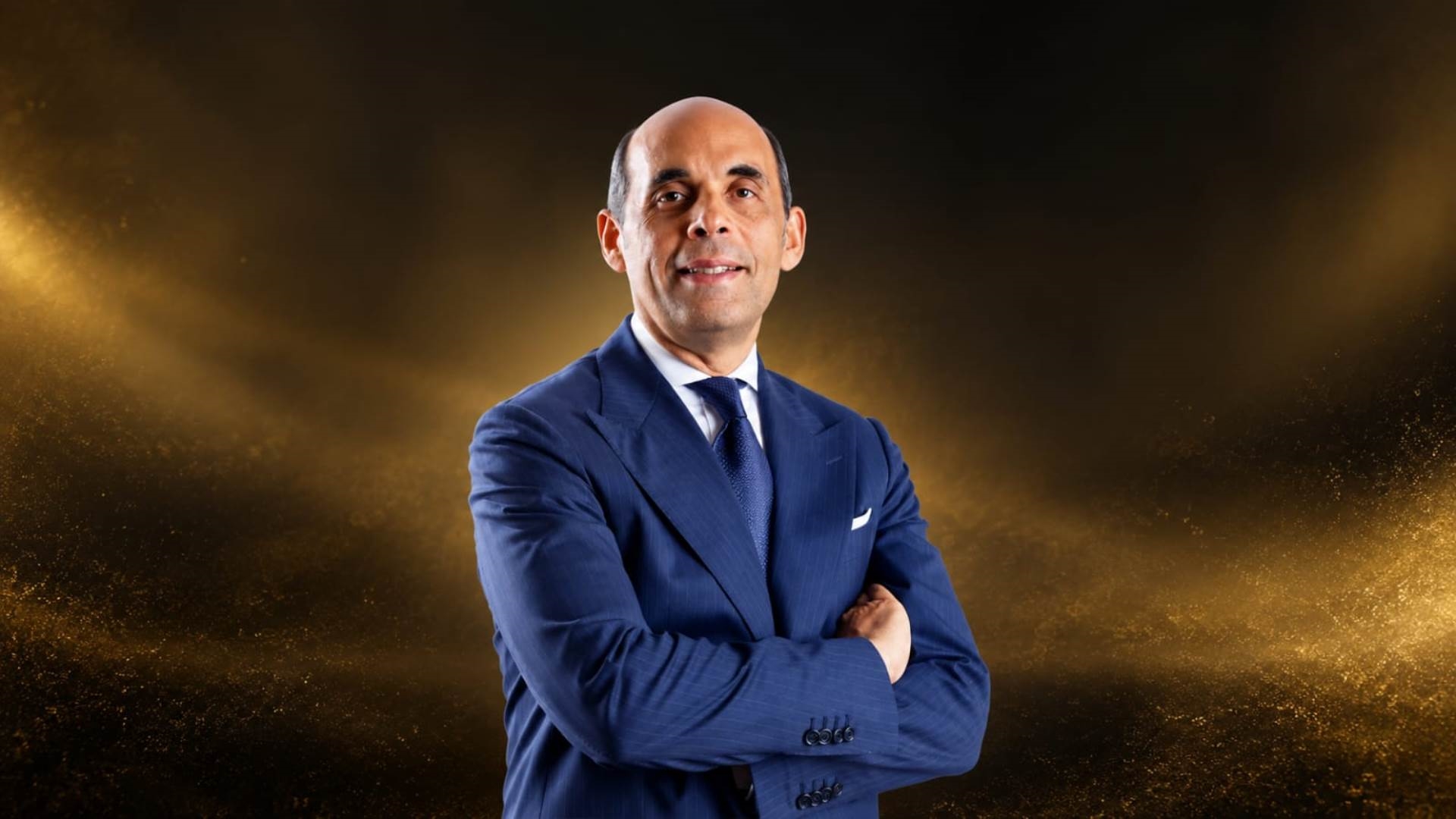
The United Bank has accelerated its growth over the past year under Tarek Fayed, who took over as Chairman and Chief Executive Officer on 1 September 2025, succeeding Ashraf El Kady.
During his first year, the bank expanded its business profile, with funding growth accompanied by faster lending expansion and improved asset quality, while maintaining strong capital and liquidity levels.
During his first year, the transformation extended beyond balance-sheet growth to the bank’s core business lines. Deposits increased sharply, lending expanded at an even faster pace, and corporate banking grew alongside continued expansion in retail banking. Meanwhile, the non-performing loan ratio improved despite the growth in the loan portfolio.
Business expansion and a stronger funding base
According to its standalone financial statements, the United Bank’s total assets rose 30.8 per cent to EGP 117.01bn at end-June 2026, from EGP 89.49bn at end-June 2025, an increase of EGP 27.53bn.
Deposit growth was the main driver of this expansion, with customer deposits rising 31.4 per cent to EGP 91.58bn at end-June 2026, from EGP 69.71bn a year earlier, an increase of EGP 21.87bn.
Growth was not confined to a single segment. Retail deposits increased 18.7 per cent year on year to EGP 50.46bn at end-June 2026, from EGP 42.52bn at end-June 2025, an increase of EGP 7.94bn.
Corporate deposits, meanwhile, surged 51.2 per cent year on year to EGP 41.12bn at end-June 2026, compared with EGP 27.19bn a year earlier, an increase of EGP 13.93bn.
The corporate segment therefore accounted for the largest share of the increase in the bank’s funding base, while retail banking continued to support deposit growth, providing the bank with a larger and more diversified funding base.
Beyond funding: Accelerating credit growth
The expansion in funding extended beyond financial position growth, translating directly into stronger lending activity. The United Bank’s customer loan portfolio grew 42.6 per cent year on year to EGP 49.63bn at end-June 2026, from EGP 34.79bn at end-June 2025, an increase of EGP 14.84bn.
Loan growth consequently outpaced deposit growth, lifting the bank’s loan-to-deposit ratio to 54.19 per cent at end-June 2026, from 49.91 per cent a year earlier, an increase of 4.28 percentage points.
This shift reflects the deployment of a greater proportion of new funding into lending, strengthening the bank’s ability to translate deposit growth into credit expansion and increase its income-generating business.
Corporates drive expansion as retail lending broadens
Corporates segment emerged as the main driver of loan portfolio growth. Corporate loans, including lending to small businesses, rose 48.1 per cent year on year to EGP 38.66bn at end-June 2026, from EGP 26.11bn at end-June 2025.
At the same time, retail loans maintained its upward trajectory, with the portfolio growing 26.3 per cent year on year to EGP 10.98bn at end-June 2026, compared with EGP 8.69bn a year earlier.
The figures highlight two parallel drivers of credit expansion. While corporate lending accounted for the largest share of the increase, retail loans continued to grow, supporting a more diversified loan portfolio and broadening the bank’s lending activities.
Loan portfolio expands, quality improves
The development of the bank’s loan portfolio extended beyond growth in its size to an improvement in credit quality. The non-performing loan (NPL) ratio declined to 0.91 per cent at end-June 2026, from 1.45 per cent at end-June 2025.
This placed the United Bank among the 10 leading banks in Egypt by NPL ratio, well below the banking sector average of 1.8 per cent at the end of the same period.
The improvement is particularly notable given that the decline in the NPL ratio coincided with an expansion in the loan portfolio, reflecting the bank’s ability to maintain lending growth while improving asset-quality indicators.
Credit expansion during Fayed’s first year therefore had two dimensions: a substantial increase in lending activity and an improvement in the quality of the growing portfolio.
Business expansion supports profitability
The expansion in business profile was also reflected in the bank’s operating performance during the first half of 2026, when the United Bank recorded a net profit of EGP 1.31bn.
Net interest income rose 8.9 per cent to EGP 2.71bn in the first half of 2026, from EGP 2.49bn in the corresponding period of 2025.
Net fee and commission income also increased 4.5 per cent to EGP 367.38mn, compared with EGP 351.63mn in the first half of 2025.
The bank also recorded a Return on Average Assets (ROAA) of 2.42 per cent and a Return on Average Equity (ROAE) of 14.87 per cent during the first half of 2026.
Accelerating growth puts the United Bank among Egypt’s fastest-growing banks
The strength of the United Bank’s growth trajectory became particularly evident in its first-half 2026 results, as the pace of its business expansion emerged as a distinguishing factor in comparisons with its peers.
This was reflected in First Bank’s rankings, where the United Bank topped the lists of the fastest-growing banks by customer deposits and customer loans during the first half of 2026.
It also ranked fourth among the fastest-growing banks by total assets during the period and second among banks listed on the Egyptian Exchange (EGX).
Tarek Fayed’s first year at the United Bank therefore marked a clear transformation in the bank’s growth trajectory, reflected in a larger business and an improved position among Egypt’s fastest-growing banks.
As a new year begins, the focus shifts from building momentum to testing the bank’s ability to sustain it and translate it into long-term expansion.