Decision Makers: Hisham Okasha’s two-year tenure reshapes Banque Misr’s growth trajectory
Yasmin Elsayed

Evaluating the performance of major banks requires more than measuring asset growth and lending expansion.
The more revealing indicators lie in how effectively resources are deployed, how credit growth is balanced against asset quality, and whether an expanding balance sheet translates into stronger returns.
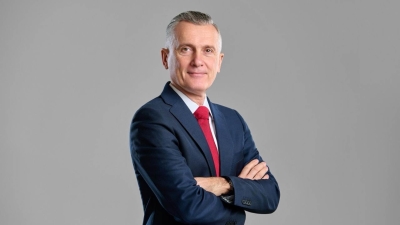
Against this backdrop, Banque Misr’s performance under Hisham Okasha, who assumed the role of Chief Executive Officer in September 2024, warrants closer examination.
As one of Egypt’s largest banking institutions, Banque Misr faces the challenge of managing an extensive business base while generating returns commensurate with the scale of its resources.
The analysis examines three interconnected dimensions of the bank’s performance under his leadership: the development of its financial position and funding base, the pace and quality of lending expansion, and the extent to which these developments have translated into profitability and returns.
Together, they provide a broader assessment of the period beyond growth in absolute figures.
Financial position expansion underpinned by stronger deposit growth
Banque Misr’s total assets rose 30.2 per cent to EGP 4.29tn at end-June 2026, from EGP 3.29tn at end-June 2024, an increase of EGP 996.17bn, according to the bank’s standalone financial statements.
The expansion reflects the growth of the bank’s business over the period, with the strengthening of its funding base emerging as a key driver. Customer deposits rose 32.2 per cent to EGP 3.02tn at end-June 2026, from EGP 2.28tn at end-June 2024, an increase of EGP 735.75bn.
Deposit growth outpaced asset expansion by approximately two percentage points, indicating that the bank’s principal funding source expanded faster than its overall balance sheet.
The significance of this trend lies in the central role customer deposits play in financing banking activities, making their growth an important measure of the resources available to support further business expansion.
Retail deposits emerge as the main driver of funding growth
Retail deposits accounted for the largest share of Banque Misr’s funding growth, rising 39.3 per cent to EGP 2.13tn at end-June 2026, from EGP 1.53tn at end-June 2024, an increase of EGP 602.48bn.
Corporate deposits, meanwhile, grew at a more moderate pace of 17.7 per cent to EGP 885.88bn, from EGP 752.61bn over the same period, adding EGP 133.27bn.
Retail customers therefore accounted for approximately 82 per cent of the total increase in deposits, highlighting the segment’s dominant contribution to the expansion of Banque Misr’s funding base.
The contrast also reveals different growth dynamics across the two segments, with retail deposits outperforming corporate balances in both percentage growth and absolute additions.
Lending outpaces deposits as corporates drive expansion
Banque Misr’s customer loan portfolio expanded 40.4 per cent to EGP 1.67tn at end-June 2026, from EGP 1.19tn at end-June 2024, representing an increase of EGP 479.48bn.
Lending growth exceeded deposit growth over the period, pointing to a faster expansion in credit activity relative to the bank’s funding base.
This shift was reflected in the loan-to-deposit ratio, which increased to 55.18 per cent at end-June 2026, from 51.96 per cent at end-June 2024, a rise of 3.22 percentage points. The movement indicates that a greater proportion of customer deposits was being deployed into lending.
A closer examination of the loan portfolio reveals contrasting growth patterns between corporate and retail banking.
Corporate loans, including lending to small economic activities, increased 38.5 per cent to EGP 1.47tn at end-June 2026, from EGP 1.06tn at end-June 2024, adding EGP 408.89bn.
Retail loans recorded faster percentage growth of 57 per cent, reaching EGP 194.36bn from EGP 123.77bn over the same period, an increase of EGP 70.59bn.
The difference highlights the distinct roles of the two segments. Corporate lending accounted for approximately 85 per cent of the total increase in customer loans, supported by its substantially larger starting base, while retail lending expanded more rapidly in percentage terms.
Corporates therefore remained the principal driver of absolute credit growth, even as retail banking gained momentum.
Credit quality remains a priority as the loan portfolio expands
The strength of credit expansion cannot be assessed through loan growth alone. Equally important is whether the bank has maintained lending discipline and controlled the risks associated with a larger portfolio.
Banque Misr’s non-performing loan (NPL) ratio declined to 1.66 per cent at end-June 2026, from 2.35 per cent at end-June 2024, an improvement of 0.69 percentage points.
The decline is particularly significant given the scale of the bank’s lending expansion, indicating that portfolio growth was accompanied by an improvement in overall credit quality.
The combination of faster lending growth and a lower NPL ratio represents an important dimension of the bank’s performance, reflecting a more favourable balance between credit expansion and asset quality.
Profits rise strongly as net interest income and fee income diverge
Banque Misr recorded a net profit of EGP 57.47bn in H1 2026, compared with EGP 48.19bn in the corresponding period of 2024, representing growth of 19.2 per cent and an increase of EGP 9.28bn.
The improvement came despite a decline in net interest income, which fell 4.7 per cent to EGP 69.57bn, from EGP 72.99bn in H1 2024.
This divergence indicates that growth in the bank’s principal income stream was not the source of the increase in net profit.
Net fee and commission income, by contrast, recorded substantial growth, rising 69.5 per cent to EGP 17.57bn, from EGP 10.37bn in the corresponding period of 2024, an increase of EGP 7.20bn.
The contrasting trends highlight the growing contribution of fee and commission income to Banque Misr’s earnings performance, even as net interest income came under pressure.
Profitability trends outpace the scope of absolute net profit growth
A comprehensive assessment of profitability also requires examining returns, as higher net profit does not necessarily indicate improved operating efficiency.
Against this backdrop, Banque Misr’s return on average assets (ROAA) declined to 2.71 per cent in H1 2026, from 3.30 per cent in the corresponding period of 2024, a decrease of 0.59 percentage points.
Return on average equity (ROAE) also fell to 26.34 per cent, from 38.77 per cent over the same period, a decline of 12.43 percentage points.
This divergence highlights the contrasting trends in earnings and returns. Despite higher net profit, both profitability ratios declined, indicating that earnings growth was not accompanied by a corresponding improvement in returns relative to the bank’s asset and equity bases.
Beyond growth: assessing Okasha’s leadership
Taken together, Banque Misr’s performance under Hisham Okasha reflects a combination of business expansion and improved credit quality, with retail deposits playing an increasingly important role in strengthening the funding base. Corporate lending remained the principal driver of absolute loan growth, despite the faster pace of expansion recorded in the retail portfolio.
On profitability, net profit growth was supported by higher net fee and commission income, even as net interest income declined. At the same time, returns on average assets and equity fell compared with their H1 2024 levels.
The period was therefore characterised by an expanding banking business and broader sources of earnings support, while profitability ratios followed a different trajectory from net profit growth. This divergence highlights the importance of balancing business expansion with improvements in returns as Banque Misr seeks to strengthen its capacity to generate sustainable profit growth.