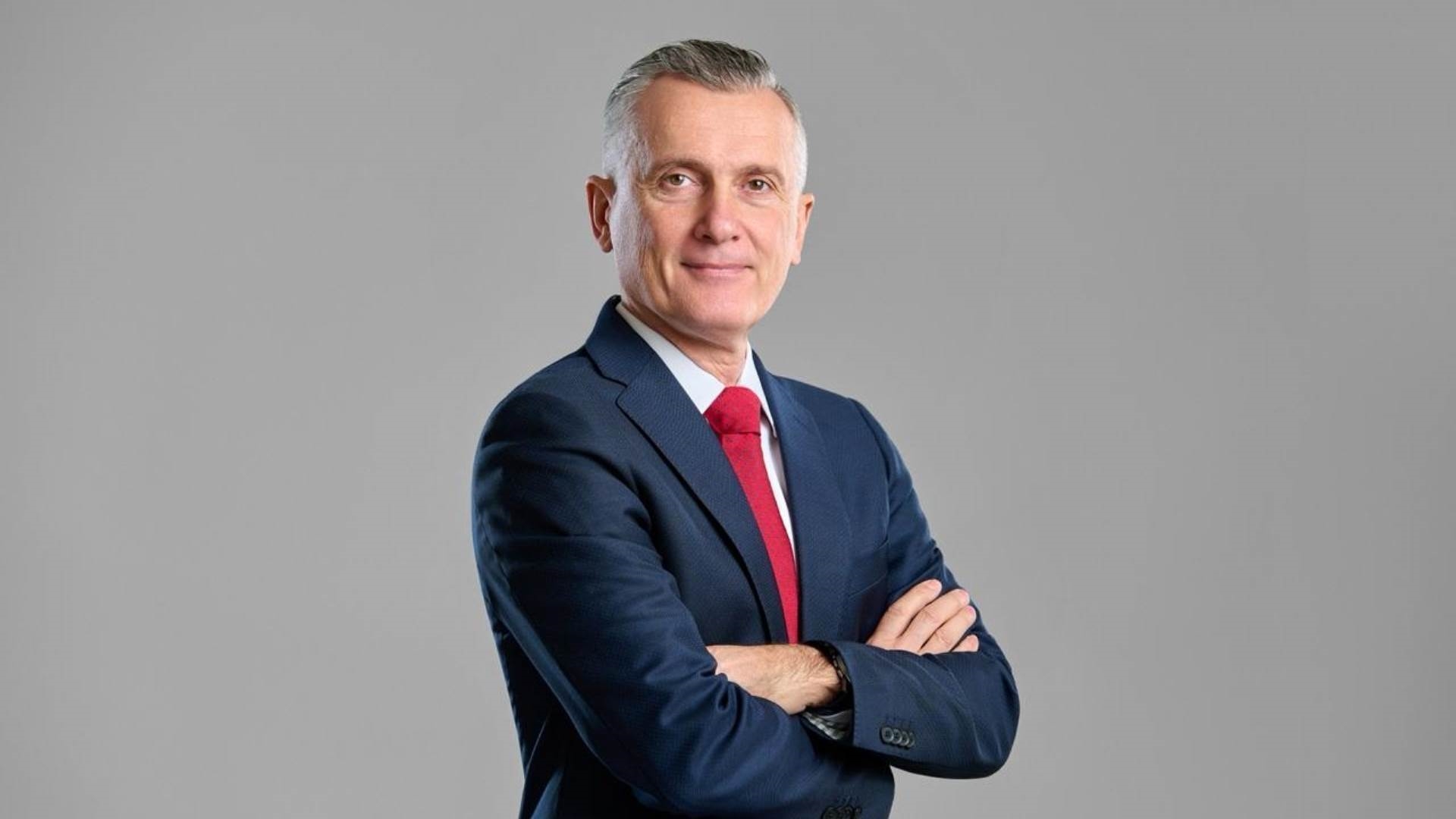
Paolo Vivona reshapes ALEXBANK’s growth model over nearly two years
Shaimaa Nasser
Profit rose more than 50 per cent as assets expanded 27.2 per cent.
ALEXBANK has seen a shift in its growth model since Paolo Vivona took the helm in October 2024, with profit rising by more than 50 per cent and assets expanding by about 27 per cent, alongside strong retail deposit growth, faster lending and higher fee and commission income.
The more important question is whether ALEXBANK simply expanded or whether the way it deploys its resources and generates profit also changed.
The shift is evident in the balance sheet. Total assets rose 27.2 per cent to EGP 273.03 billion at end-June 2026 from EGP 214.57 billion at end-2024, an increase of EGP 58.46 billion.
Deposits grew at a similar pace, rising 26.7 per cent to EGP 212.93 billion from EGP 168.04 billion over the same period, providing the funding base for the bank’s balance-sheet expansion.
Equity grew more slowly, rising 18.8 per cent to EGP 32.91 billion from EGP 27.71 billion, an increase of EGP 5.20 billion. This accounted for about 8.9 per cent of the increase in assets, indicating that balance-sheet expansion was driven primarily by growth in the bank’s funding base rather than a comparable increase in equity.
More significant was the change in the deposit mix. Retail deposits jumped 46.6 per cent to EGP 170.07 billion from EGP 115.97 billion, adding EGP 54.10 billion. Corporate deposits moved in the opposite direction, falling by EGP 9.20 billion to EGP 42.86 billion from EGP 52.06 billion.
The net EGP 44.90 billion increase in deposits therefore masks a larger shift in funding. Growth in retail deposits more than offset the decline in institutional deposits, lifting their share of total deposits to 79.9 per cent from about 69 per cent. Retail banking consequently became the main source of new funding behind ALEXBANK’s expansion.
Lending drives expansion
The stronger funding base supported faster lending growth. Customer lending rose 35.9 per cent to EGP 92.69 billion at end-June 2026 from EGP 68.20 billion at end-2024, an increase of EGP 24.49 billion. The loans-to-assets ratio consequently increased to about 34.0 per cent from 31.8 per cent.
Lending also outpaced both asset and deposit growth, increasing its weight within the balance sheet and indicating a greater allocation of resources to interest-earning assets.
The composition of lending growth, however, shows that ALEXBANK did not shift towards a purely retail-led model. Retail lending rose 28.5 per cent to EGP 41.49 billion from EGP 32.30 billion, an increase of EGP 9.19 billion. Corporate lending grew 25.4 per cent to EGP 51.20 billion from EGP 40.82 billion, adding about EGP 10.38 billion.
This created a clear divergence between the bank’s funding and lending mix. Retail deposits increased by EGP 54.10 billion, while retail lending rose by EGP 9.19 billion. Corporate lending, meanwhile, increased by about EGP 10.38 billion despite a EGP 9.20 billion decline in institutional deposits.
The shift was therefore not towards a purely retail banking model, but towards a broader retail funding base while maintaining a diversified lending portfolio.
The balance-sheet changes also fed through to the income statement. Net interest income rose 29.4 per cent to EGP 11.49 billion in H1 2026 from EGP 8.88 billion in H1 2024, an increase of EGP 2.61 billion, remaining the bank’s largest income driver.
Net fee and commission income grew much faster, rising 94.6 per cent to EGP 1.715 billion from EGP 881.4 million over the same period, an increase of EGP 834 million. While net interest income remained the larger contributor in absolute terms, the faster growth in fees and commissions broadened the bank’s sources of income beyond those directly linked to the interest margin.
In absolute terms, net interest income added EGP 2.610 billion to income, compared with EGP 834 million from fees and commissions. Net profit increased by EGP 2.561 billion to EGP 7.646 billion at end-June 2026 from EGP 5.085 billion at end-June 2024.
The expansion in the bank’s main income streams therefore did not translate fully into net profit, as other items absorbed part of the improvement. Profit growth nevertheless remained stronger than the pace of balance-sheet expansion.
Returns improve alongside profit growth
Net profit grew 34.8 per cent in FY2025, reflecting continued earnings growth alongside faster lending and a broader income base.
Efficiency indicators also improved. Return on average assets rose to 6 per cent in 2025 from 5.4 per cent in 2024, while return on equity increased to 43.3 per cent from 43 per cent.
These levels helped ALEXBANK rank third among banks operating in Egypt in FirstBank’s ranking of the best-performing banks by return on average assets and return on average equity at end-2025.
The performance continued into the first quarter of 2026, when ALEXBANK recorded a 2.9 per cent return on average assets and a 21.9 per cent return on equity.
While the quarterly ratios are not directly comparable with full-year measures, they provide an early indication that ALEXBANK continued to generate strong returns on its asset and equity bases in 2026.
Over nearly two years, Vivona’s impact has extended beyond balance-sheet expansion. Retail deposits became the main source of new funding, lending grew faster than both assets and deposits, and the bank maintained a diversified lending mix while broadening its income base through faster growth in fees and commissions.