Decision-makers: Ihab ElSewerky leads ADCB Egypt's corporate loans surge as default rate declines
In banking, combining rapid credit expansion with improved portfolio quality is one of the most challenging management equations. Significant loan growth is often accompanied by greater risk exposure, making the ability to balance both a key measure of executive performance.
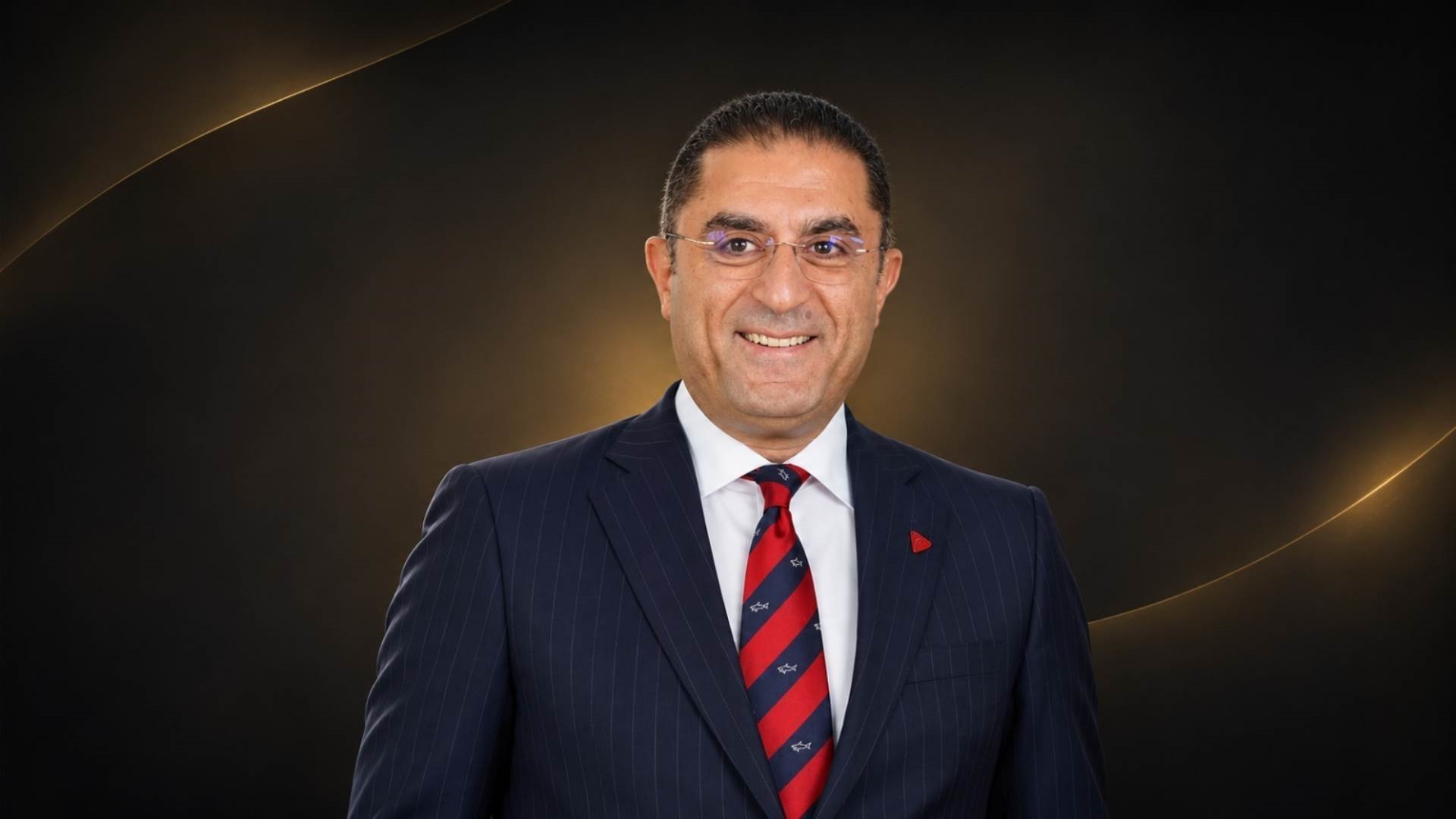
Ihab ElSewerky, Executive Board Member, Managing Director and CEO of ADCB Egypt, stands out as a notable example of this balance, as the Bank recorded exceptional growth in corporate loans alongside a decline in the relative share of Stage 3 loans.
This transformation began when the Bank launched its new identity in the Egyptian market in August 2020, following the parent group's acquisition of Union National Bank – Egypt, marking the beginning of a new phase of expansion and business restructuring.
Corporate loans surge 535 per cent as risk dynamics shift
ADCB Egypt's standalone financial statements reveal that loans to corporates and SMEs surged by 535.27 per cent between end-2020 and September 2026, reaching EGP 71.51 bn, compared to EGP 11.26 bn.
This represents an increase of EGP 60.25 bn, reflecting the significant expansion in the Bank's corporate lending activity throughout the period, which has become the primary driver of its overall loan portfolio growth.
The expansion was not limited to portfolio growth, but also reshaped its structure, as corporates accounted for 87.20 per cent of the total increase in customer loans during the period.
Consequently, corporates' share of the total loan portfolio rose to 82.68 per cent by end-September 2026, compared to 64.75 per cent at end-2020, highlighting their growing importance within the Bank's lending activities.
Meanwhile, retail loans increased to approximately EGP 14.98 bn by end-September 2026, compared to EGP 6.13 bn at end-2020, recording growth of 144.35 per cent over the period.
This reflects continued expansion across both segments, although corporates have emerged as the primary engine of growth in the Bank's overall loan portfolio, supported by their significantly larger contribution to incremental lending.
However, the most notable aspect of the Bank's experience emerges when examining portfolio quality rather than lending volumes, as corporate loans expanded by more than 535 per cent while their relative default ratio declined.
The corporate default ratio fell to 5.32 per cent by end-September 2026, compared to approximately 7.70 per cent at end-2020, representing an improvement of 2.38 percentage points.
Nevertheless, absolute figures reveal another dimension of the risk equation, as corporate loans classified under Stage 3 reached approximately EGP 3.82 bn by end-September 2026, compared to EGP 867.13 mn at end-2020.
Notably, corporates accounted for approximately 90.50 per cent of total Stage 3 loans by end-September 2026, exceeding their 82.68 per cent share of the overall loan portfolio.
This highlights the importance of managing risks associated with the corporate segment to preserve the quality of the Bank's loan portfolio, particularly given its growing contribution to total lending and classified exposures.
The distinctive aspect of ElSewerky's approach lies in the fact that exceptional corporate lending growth coincided with an improvement in the relative risk indicator compared to the beginning of the period.
This improvement came despite the increase in the absolute value of Stage 3 exposures, highlighting the scale of the challenge facing management in balancing credit expansion with portfolio quality.
The significance of this experience therefore extends beyond adding more than EGP 60 bn to corporate loans, encompassing the Bank's ability to manage the risks accompanying expansion while maintaining portfolio quality.
Profits surge 827 per cent as returns on average assets and equity improve
The Bank's transformation was also reflected in its financial performance, as net profit surged to approximately EGP 3.42 bn during the first nine months of 2026, compared to EGP 369.60 mn in the corresponding period of 2020.
This represented growth of approximately 827.4 per cent, highlighting the substantial improvement in the Bank's profitability over the period, alongside its expansion in lending activities and the development of its business model.
The improvement extended beyond absolute profit figures to include resource utilisation efficiency, as return on average assets (ROAA) increased to 2.37 per cent during the first nine months of 2026, compared to 1.56 per cent.
Similarly, return on average equity (ROAE) rose to 23.28 per cent, compared to 17.97 per cent, indicating improved profitability relative to the Bank's asset base and shareholders' equity.
These indicators were calculated based on the nine-month financial results without annualising them, providing a direct comparison of the Bank's profitability ratios across the two corresponding periods.
ElSewerky's experience gains further significance considering his banking career spanning more than 30 years, including senior positions in credit and risk management, in addition to his regulatory and advisory experience.
He also served as a risk management adviser under the Central Bank of Egypt's Banking Sector Reform Programme, adding further depth to his experience in managing banking risks and strengthening financial institutions.
In 2018, he assumed the position of Managing Director of Union National Bank – Egypt, before leading the Bank's transition to the ADCB Egypt brand in August 2020.
Over the following years, the Bank witnessed substantial expansion in corporate lending, alongside significant changes in its loan portfolio structure, profitability and overall financial performance.
Overall, ADCB Egypt's experience under ElSewerky's leadership reveals a fundamental transformation in its lending structure, with corporates accounting for the majority of incremental loans alongside an improved relative Stage 3 loans ratio.
The Bank also recorded stronger profitability and improved returns on average assets and equity compared to 2020, reflecting the broader financial impact of its expansion and business transformation.
Ultimately, the defining feature of ElSewerky's experience lies not merely in adding more than EGP 60 bn to corporate loans, but in combining substantial expansion with relative improvements in portfolio quality.