Arab currencies diverge against US dollar in 2026.. Libyan dinar records steepest decline
Libyan dinar loses 15.77% against US dollar, while Egyptian pound ranks third among Arab currencies with a 12.05% decline
14 Arab currencies weaken against US dollar, while two appreciate and five remain relatively stable
First Bank’s analysis tracking the performance of Arab currencies against the US dollar from the beginning of 2026 through the latest available exchange rates as at November 8 revealed divergent movements across 21 Arab currencies.
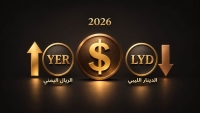
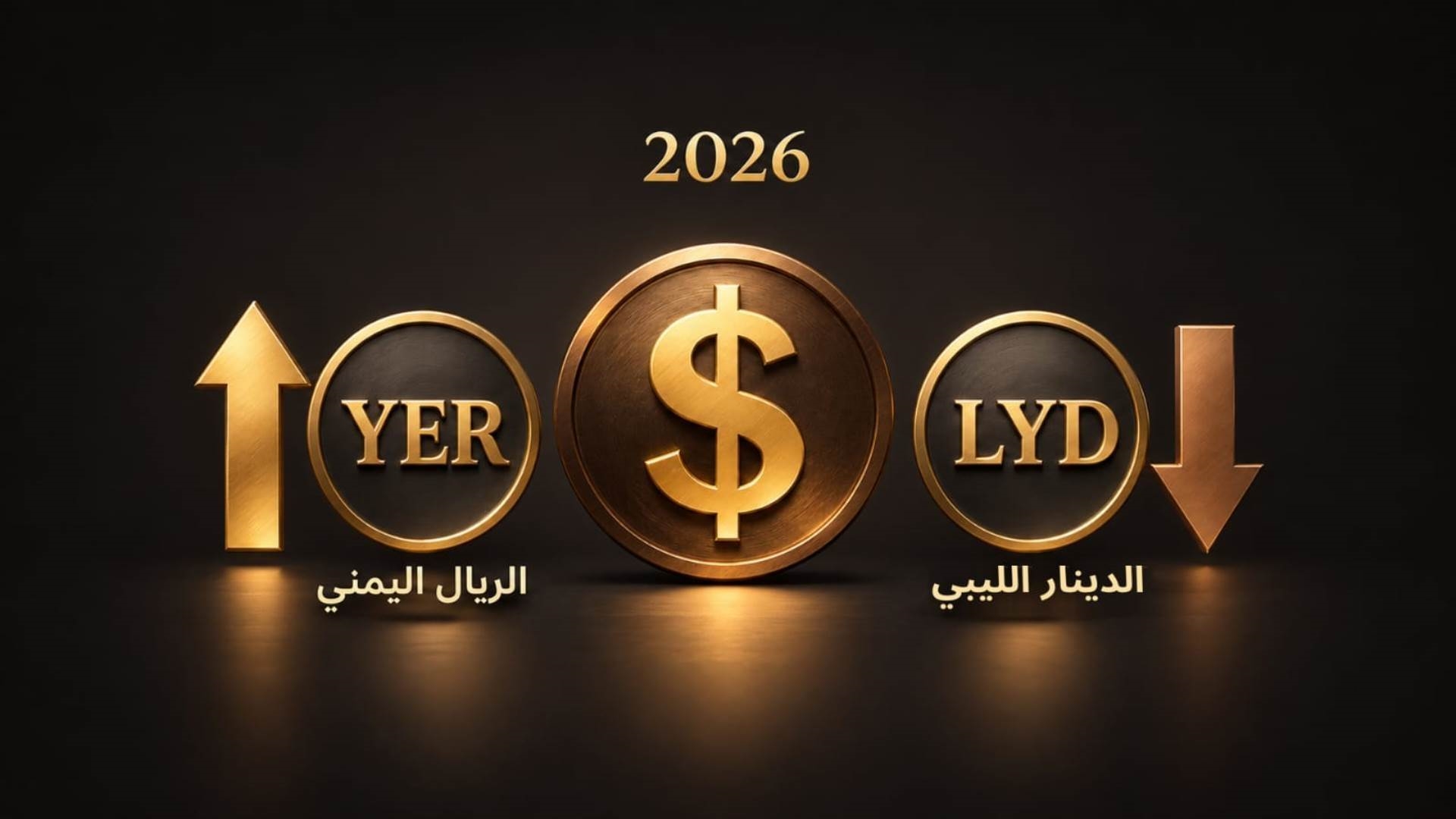
The Libyan dinar recorded the sharpest decline, while the Yemeni rial led currencies appreciating against the US dollar. Meanwhile, the Egyptian pound ranked third among Arab currencies experiencing the steepest depreciation during the period under review.
The ranking showed that 14 Arab currencies depreciated against the US dollar during the period under review, representing approximately 66.7 per cent of the total currencies monitored. Meanwhile, two currencies appreciated, accounting for 9.5 per cent, while five remained relatively stable, representing 23.8 per cent.
The Libyan dinar topped the list of Arab currencies recording the sharpest depreciation against the US dollar, losing approximately 15.77 per cent of its value since the beginning of the year, as the dollar exchange rate rose to LYD 6.43, compared with LYD 5.4159 in early January 2026.
The Iraqi dinar ranked second, depreciating by approximately 13.59 per cent against the US dollar, as the dollar exchange rate increased to IQD 1,516, compared with IQD 1,310 at the beginning of the year.
The Egyptian pound ranked third among Arab currencies, losing approximately 12.05 per cent of its value against the US dollar since the beginning of 2026. The dollar exchange rate rose to EGP 54.235, compared with EGP 47.70 in early January, an increase of EGP 6.535.
The Syrian pound came fourth, depreciating by approximately 9.34 per cent against the US dollar, as the dollar exchange rate increased to SYP 122, compared with SYP 110.6 at the beginning of the year. The Moroccan dirham followed in fifth place, declining by 6.53 per cent, with the dollar rising to MAD 9.7498, compared with MAD 9.1135.
The depreciation trend extended to the Comorian franc, which ranked sixth with a decline of 4.95 per cent, followed by the Algerian dinar in seventh place, down 4.83 per cent, and the Tunisian dinar in eighth place, declining by 4.16 per cent.
The Mauritanian ouguiya ranked ninth, losing approximately 1.78 per cent of its value against the US dollar, while the Lebanese pound came tenth, recording a decline of approximately 0.20 per cent during the period under review.
Limited movements among Arab currencies recording smaller declines
Among currencies recording more limited movements against the US dollar, the Somali shilling ranked eleventh, depreciating by approximately 0.17 per cent, followed by the Kuwaiti dinar at 0.13 per cent, the Saudi riyal at 0.09 per cent, and the Sudanese pound at 0.02 per cent.
Meanwhile, five Arab currencies remained relatively stable against the US dollar during the period under review: the UAE dirham, Bahraini dinar, Jordanian dinar, Omani rial and Djiboutian franc.
Four of these currencies maintained their exchange rates at the beginning-of-year levels without any measurable change. The UAE dirham, meanwhile, recorded a marginal movement of approximately 0.005 per cent, reflecting no material change in its value against the US dollar.
This divergence reflects differences in exchange rate regimes and monetary policies across Arab countries, as currency movements are influenced by each country's monetary framework and the extent of its currency's peg to the US dollar, alongside varying economic and monetary conditions.
Two Arab currencies appreciate against US dollar in 2026
On the other hand, two Arab currencies appreciated against the US dollar since the beginning of 2026, led by the Yemeni rial, which gained approximately 0.73 per cent as the dollar exchange rate declined to YER 236.63, compared with YER 238.35 in early January.
The Qatari riyal ranked second among currencies that appreciated against the US dollar, gaining approximately 0.27 per cent, as the dollar exchange rate declined to QAR 3.645, compared with QAR 3.655 at the beginning of the year.
The ranking highlights the widening gap between Arab currencies' performances against the US dollar in 2026. The difference between the Libyan dinar's 15.77 per cent depreciation and the Yemeni rial's 0.73 per cent appreciation reached approximately 16.50 percentage points, reflecting divergent exchange rate trends across Arab markets.