Strong net profit performance for Emirates NBD Egypt in H1 2026
Yasmine elsayed
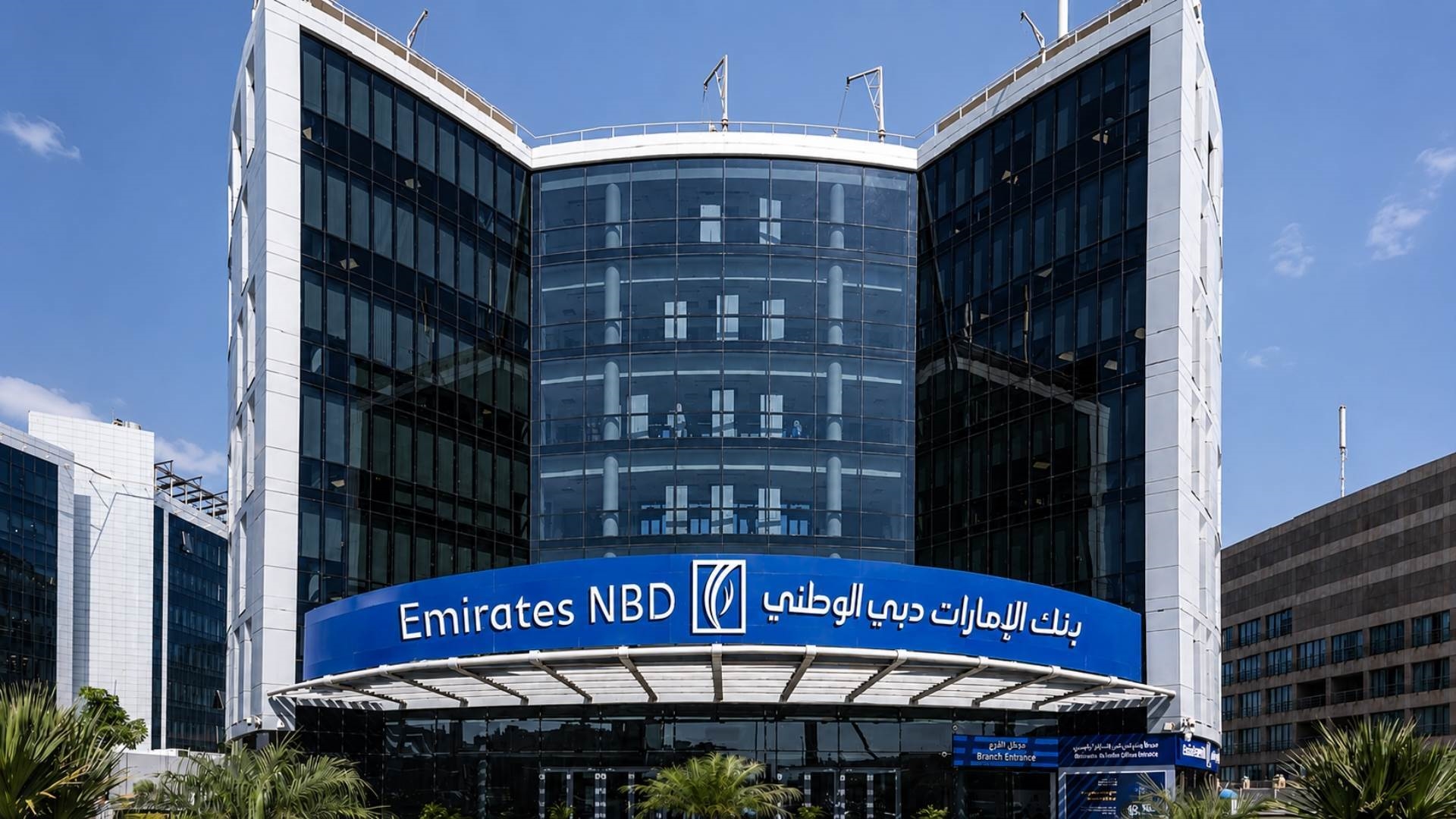
Emirates NBD Egypt reported net profit of EGP 3.31 billion in H1 2026, up 9.6 per cent year-on-year from EGP 3.02 billion, according to the bank’s statement.
Although net profit rose in H1 2026, the increase was driven mainly by stronger core income streams, particularly net interest income, alongside gains in other income lines. Higher operating expenses and credit-loss charges, however, limited the impact of these gains on net profit.
Net interest income drives core earnings
Net interest income was the main earnings driver, rising 24 per cent to EGP 7.55 billion in H1 2026 from EGP 6.09 billion a year earlier.
The increase reflected faster growth in Interest from loans and similar income than in the cost of deposits and similar expenses. Interest income and similar income rose 20.2 per cent to EGP 18.51 billion, from EGP 15.40 billion in H1 2025.
Meanwhile, cost of deposits and similar expenses increased 17.7 per cent to EGP 10.96 billion, from EGP 9.31 billion.
The roughly 2.5 percentage-point gap between their growth rates supported the increase in net interest income.
Fee income growth offset by higher expenses
Fee-based income made only a limited contribution to earnings growth, as net fees and commissions income rose just 0.6 per cent to EGP 923.56 million from EGP 918.46 million in H1 2025.
Fees and commissions income increased 14.1 per cent to EGP 1.41 billion, while fees and commissions expenses climbed 52.7 per cent to EGP 490.87 million, from EGP 321.54 million.
The sharper rise in commission expenses absorbed much of the increase in fee income, leaving net fees and commissions income broadly flat, up just 0.6 per cent.
Trading and investment gains provide additional support
Other income streams also strengthened during the period, with net trading income rising 85.3 per cent to EGP 544.81 million from EGP 293.99 million in H1 2025.
Gains on financial investments increased 145.7 per cent to EGP 40.75 million, from EGP 16.59 million, while dividend income rose to EGP 2.08 million from EGP 714,000.
Credit-loss charges remain elevated despite improved asset quality
The bank’s Impairment charges of credit losses rose 7.4 per cent to EGP 831.03 million in H1 2026, from EGP 773.46 million a year earlier.
This came despite an improvement in credit quality, with the non-performing loan ratio falling to 3.40 per cent at end-June 2026 from 3.62 per cent at end-June 2025.
The figures suggest that the improvement in the loan portfolio’s credit quality was not sufficient during the period to reduce the impact of credit losses on the income statement, with the bank continuing to record a relatively high credit-loss burden.
The decline in the non-performing loan ratio nevertheless points to improved asset quality. A stronger impact on profitability would require a sustained reduction in the cost of risk and credit-loss charges.
Rising operating costs weigh on profitability
Operating expenses were another major source of pressure on profitability, absorbing part of the gains from income growth and limiting their full impact on net profit.
Administrative expenses increased 21.1 per cent to around EGP 2 billion in H1 2026, from EGP 1.66 billion a year earlier.
Other operating expenses more than doubled, rising 118.8 per cent to around EGP 1 billion, from EGP 500.75 million in H1 2025.
Income tax expense rose 32.8 per cent to EGP 1.82 billion, from EGP 1.37 billion a year earlier.
Overall, Emirates NBD Egypt’s H1 2026 results point to strong income generation, but rising costs and continued credit-loss charges limited the extent to which that strength translated into net profit.
Looking ahead, the focus will be on extracting greater returns from existing growth rather than relying solely on business expansion. That will require tighter control of operating costs and credit risk while maintaining asset quality.
The bank also has room to strengthen profitability by expanding non-interest income, particularly fees and commissions, with greater emphasis on higher-return, lower-cost products and services.
A better balance between income growth, operating efficiency and risk management will be critical to turning stronger operating performance into more sustainable net profit growth.