NBK Egypt marks seven years of expansion under Yasser El Tayeb
Shimaa Nasser
Translated & Edited by Aya Elsayed
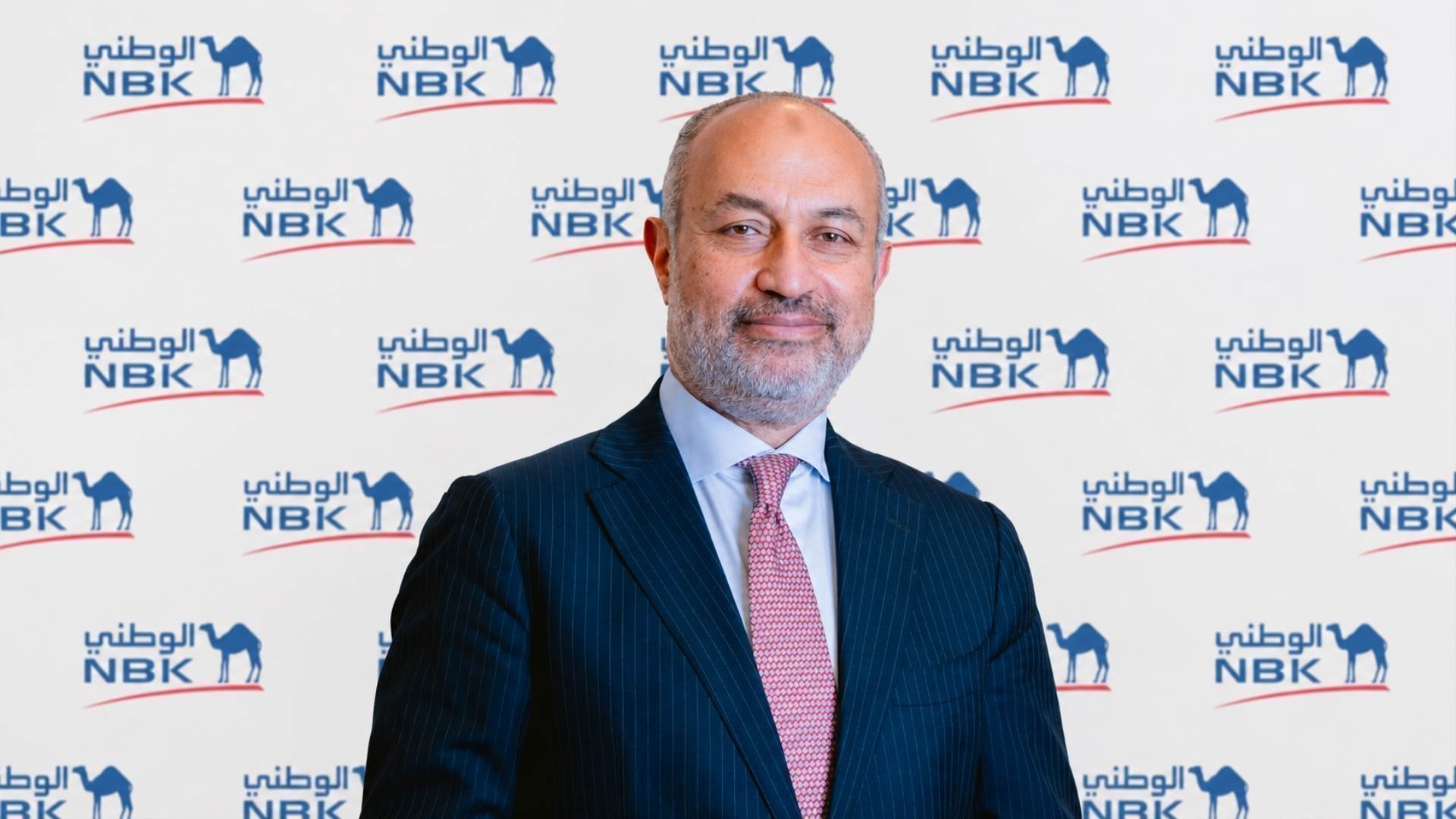
National Bank of Kuwait – Egypt (NBK-Egypt) has recorded strong growth across its business base over the seven years since Yasser El-Tayeb took over as Vice Chairman, Chief Executive Officer and Managing Director in August 2019.
During his tenure, the bank expanded its assets, loans and deposits, while also achieving greater business diversification, a stronger capital base and consistently high asset quality across its loan portfolios.
The bank’s indicators over this period point to an expansion that went beyond growth in scale to encompass its business structure, profitability and funding sources, reflecting a clear evolution in NBK-Egypt’s business model.
According to the bank’s financial statements, total assets increased from EGP 64.3 billion at end-2019 to EGP 270.3 billion at end-June 2026, representing growth of 320.2 per cent, while loans rose from EGP 32.3 billion to EGP 148.5 billion over the same period, an increase of 360.1 per cent.
As a result, loans as a share of total assets increased from about 50.2 per cent to 54.9 per cent, reflecting the allocation of a larger share of the balance sheet to core banking activities as the bank expanded.
The expansion was not limited to growth in the loan portfolio, but also extended to its composition. Retail loans increased from EGP 5.5 billion at end-2019 to EGP 31.7 billion at end-June 2026, growing by 474.6 per cent, while corporate loans rose from EGP 26.8 billion to EGP 116.8 billion over the same period, an increase of 336.5 per cent.
As a result of the different growth rates between the two segments, retail loans increased their share of the total portfolio from 17.1 per cent to 21.4 per cent, while the share of corporate loans declined from 82.9 per cent to 78.6 per cent over the period under review. This reflects a gradual expansion of the retail business while corporates remained a core component of the bank’s business model.
The quality of the portfolio reinforces the significance of this expansion. The quality of the retail loan portfolio stood at 99.18 per cent at end-June 2026, compared with 99.39 per cent for the corporate loan portfolio.
These levels are particularly significant given the strong growth in lending, especially in the retail segment, indicating that the expansion of the portfolio was not accompanied by a material deterioration in asset quality.
This trend points to a management approach focused on broadening the bank’s growth base rather than redistributing it. Retail grew at a faster pace and gained a larger presence within the portfolio, but not at the expense of the corporate segment, which remained the largest component of the business.
The diversification also extended to the funding base. Retail deposits increased from EGP 31.8 billion at end-2019 to EGP 105.8 billion at end-June 2026, growing by 233 per cent, while corporate deposits rose from EGP 19.8 billion to EGP 99.9 billion over the same period, an increase of 404.9 per cent. As a result, corporate deposits accounted for close to half of the total deposit base at end-June 2026, compared with less than 40 per cent at end-2019.
This shift reflects an evolution in both the bank’s business and funding sources. The bank did not expand only the asset side of its balance sheet, but also broadened the customer and funding base supporting that growth, alongside a gradual change in the distribution of components within the balance sheet.
Broader base supports earnings quality, profitability
The impact of this expansion was clearly reflected in the bank’s income-generating capacity.
Net interest income increased from EGP 3.09 billion in 2019 to EGP 13.74 billion in 2025, representing growth of 344.5 per cent, while net income from fees and commissions rose from EGP 506.9 million to EGP 1.87 billion, an increase of 268.4 per cent over the same period.
This was reflected in net profit, which increased from EGP 2.17 billion in 2019 to EGP 8.09 billion in 2025, representing growth of 273 per cent. At the same time, Return on Average Assets (ROAA) improved from 3.1 per cent to 3.8 per cent, while Return on Average Equity (ROAE) rose from 30.2 per cent to 30.7 per cent over the same period.
The significance of these indicators lies in the relationship between growth and the preservation of productivity. As assets expanded to more than four times their 2019 level, ROAA did not decline but instead improved, while ROAE remained at a high level.
This reflects management’s ability to translate growth in the business base into profitability rather than merely achieving expansion in scale.
At the same time, business growth was accompanied by an expansion in the capital base. Shareholders’ equity increased from EGP 8.01 billion at end-2019 to EGP 33.08 billion at end-June 2026, representing growth of 313 per cent.
Despite this substantial increase, the equity-to-assets ratio remained relatively stable at 12.2 per cent at end-June 2026, compared with 12.5 per cent at end-2019, reflecting growth in the capital base alongside balance-sheet expansion without a material change in the contribution of equity to asset funding.
2026: A new phase in the growth trajectory
The first-half 2026 results reflect the strength of the trajectory built over the seven-year period. The bank recorded net profit of EGP 4.22 billion, net interest income of EGP 7.24 billion and net income from fees and commissions of EGP 994.2 million, while ROAA stood at 3.4 per cent and ROAE at 26.7 per cent.
The seven years under Yasser El-Tayeb’s leadership therefore point to a transformation in NBK-Egypt’s capabilities that goes beyond an increase in the bank’s scale.
The bank's asset base expanded, the loan mix shifted as retail grew at a faster pace, the capital base strengthened and its ability to generate income and profitability increased, while maintaining high levels of quality across its loan portfolios.
The outcome suggests that management’s mark over the period was not to change the bank’s identity, but rather to expand its capacity to operate and grow within its core business model, while adding new growth engines and preserving its existing strengths.
As the bank reaches this scale, the nature of the management challenge in the next phase is changing.
The priority is no longer to build scale at the same pace, but to maximise returns from the base already established, maintain asset quality, improve capital efficiency and develop income sources in a way that supports continued and sustainable profitability growth.