
HSBC Egypt: Is the planned retail sale behind weaker Q2 results?
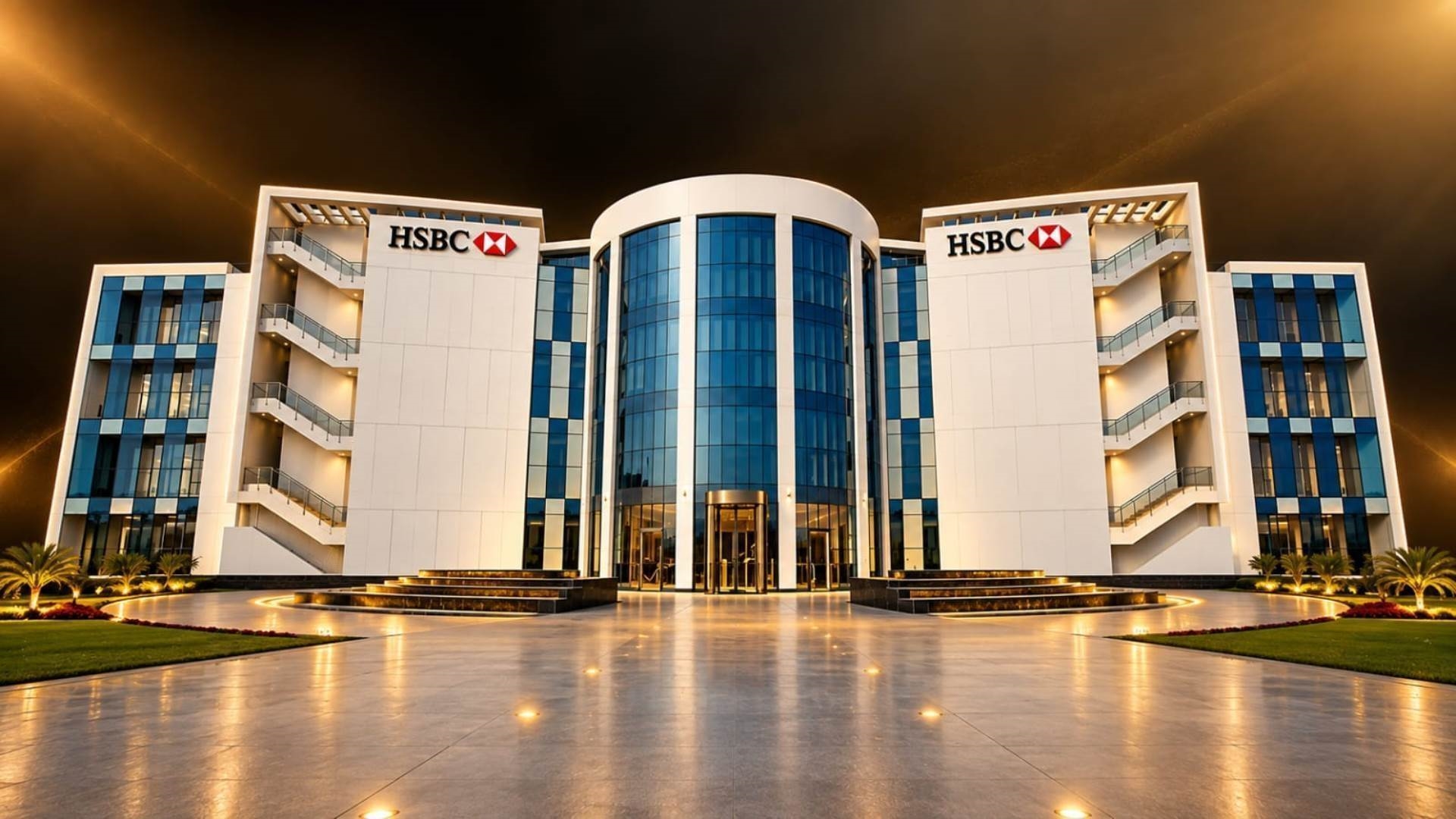
HSBC Group announced in November 2025 that it had begun a comprehensive strategic review of its retail banking operations in Egypt as part of a broader restructuring aimed at sharpening its focus on corporate banking.
In August 2026, the review moved from strategic assessment to execution, after Emirates NBD Egypt announced that it had entered into definitive agreements to acquire HSBC Egypt’s retail banking business. The transaction marks one of the most significant developments in the bank’s Egyptian operations in recent years.
The transaction includes the retail banking portfolio, branch network, automated teller machines (ATMs), customer base, and employees associated with this business, while excluding HSBC Egypt’s corporate banking operations.
The significance of the deal extends well beyond the transfer of a retail customer portfolio from one bank to another.
It comes as HSBC redefines its position in the Egyptian market, raising a broader question over whether its future presence in Egypt will continue to include retail banking or become increasingly concentrated in the areas it has chosen to prioritise, particularly corporate banking.
From this perspective, HSBC Egypt’s H1 2026 financial results offer a revealing picture, particularly given the sharp contrast between the first and second quarters. The bank posted strong growth across several indicators in Q1, before momentum reversed markedly in Q2.
According to the bank’s standalone financial statements, HSBC Egypt’s assets rose by around 18 per cent in Q1 2026, before declining by 14.2 per cent in Q2 to EGP 356.84 bn at end-June 2026.
Customer deposits followed a similar pattern, rising by 21.3 per cent in Q1 before contracting by 14.7 per cent in Q2 to EGP 275.29 billion at end-June.
Total customer loans also increased by 7.2 per cent in Q1, but fell by 2.6 per cent in Q2 to EGP 61.95 bn at end-June.
The shift was not confined to one side of the balance sheet. It was evident in both retail and institutional banking, although the direction of the changes varied between loan portfolios and deposits.
In retail banking, personal loans declined by 0.5 per cent in Q1 2026 before increasing by 3.1 per cent in Q2 to EGP 19.47 bn at end-June.
Retail deposits, meanwhile, rose by 16.3 per cent in Q1 before declining by 5.6 per cent in Q2 to EGP 134.82 bn at the end of H1 2026.
The corporate banking segment also recorded notable growth at the start of the year. The corporate loan portfolio, including small loans for economic activities, increased by 10.8 per cent in Q1 before falling by 5 per cent in Q2 to EGP 42.49 bn at end-June.
The shift was more pronounced in corporate deposits, which rose by 25.6 per cent in Q1 before declining by 22 per cent in Q2 to EGP 140.47 bn at end-June.
These figures highlight a notable contrast in HSBC Egypt’s performance. The bank started 2026 with clear momentum across its key indicators but failed to maintain the same trajectory in the following quarter.
As a result, H1 performance appears less indicative of sustained growth and more reflective of a period of significant adjustments in the bank’s balance sheet.
H1 figures alone, however, are insufficient to establish that the decline in Q2 was linked to the restructuring of the retail banking business or the announced deal with Emirates NBD Egypt, particularly as the transaction had not yet been completed and movements in banking portfolios are influenced by multiple factors.
Nevertheless, these developments are difficult to assess separately from the strategic shift HSBC has begun to pursue in Egypt.
The planned exit from retail banking may reflect not so much a decline in confidence in the brand as a redefinition of the role the group intends to play in the market, shifting from a bank serving both individuals and institutions towards a greater focus on corporate clients.
From this perspective, the acquisition is more than a transfer of a retail banking portfolio from one bank to another.
It is reshaping the distribution of banking activity in the market, as the business HSBC has decided to relinquish moves to another bank seeking to expand its presence, while HSBC retains the activities that are more closely aligned with its new strategic direction.
The key question, therefore, is not whether HSBC will remain in Egypt, but rather the form, scale and sources of growth of its future presence.
The deal alone is insufficient to conclude that the brand has lost momentum, just as the Q2 figures alone do not establish that the bank has entered a period of contraction. Instead, the two developments point to a new phase whose implications will become clearer as the bank reshapes its balance sheet following completion of the transaction.
This is where the bank’s upcoming results become particularly important. If the resources retained by HSBC are channelled into a more focused corporate banking model, the current developments may represent a restructuring of its business model rather than a contraction of its operations in Egypt.
However, if key business indicators continue to decline, the interpretation of the shift as merely a strategic repositioning will become less consistent with the direction of the figures.