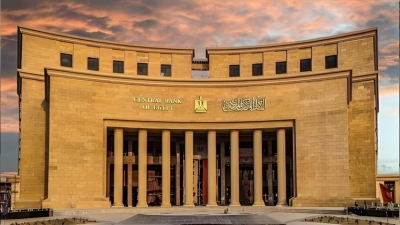
Hassan Abdalla’s CBE tenure: The record behind a renewed mandate
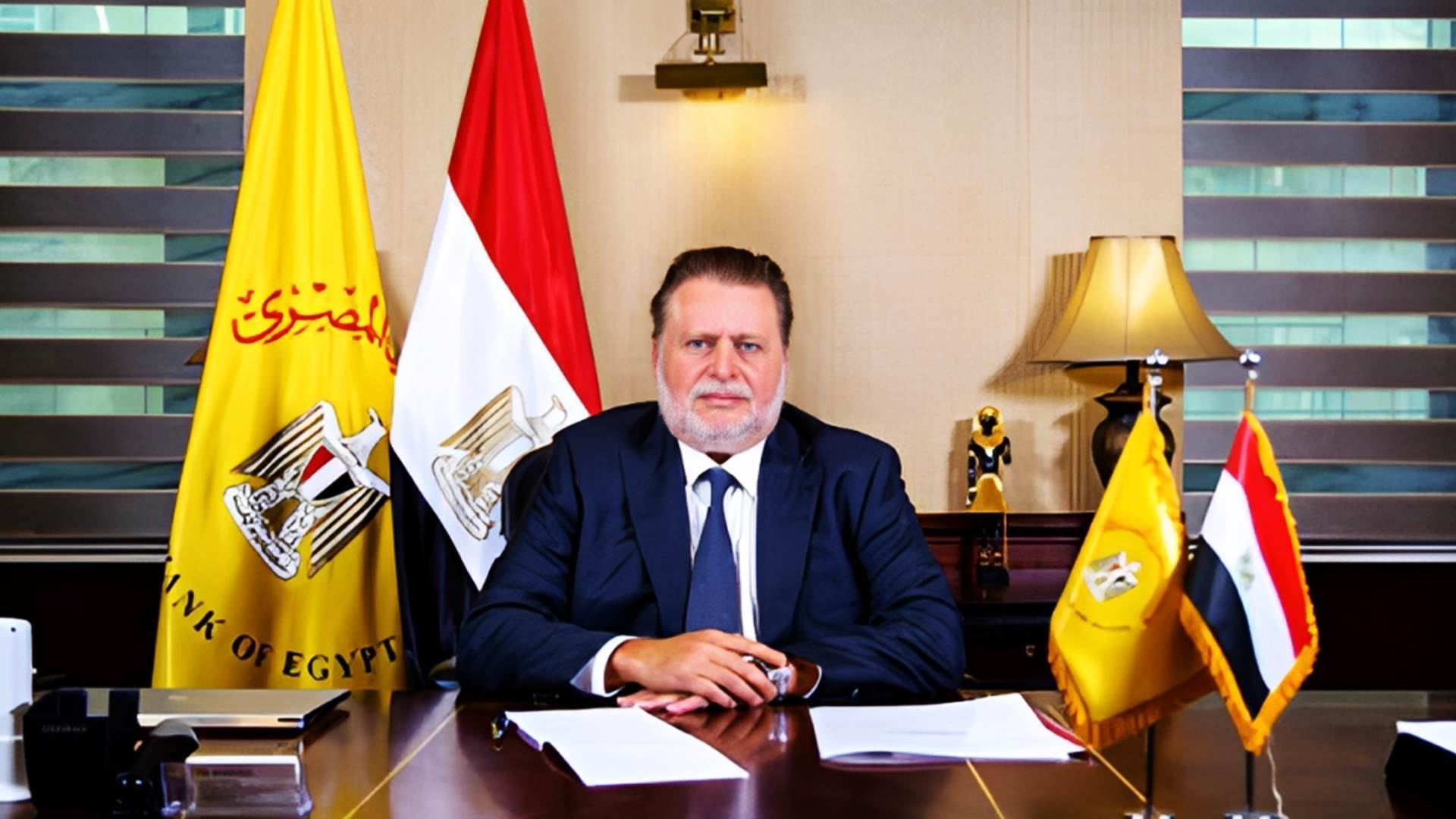
President Abdel Fattah El-Sisi issued a presidential decree renewing Hassan Abdalla’s mandate as acting governor of the Central Bank of Egypt (CBE) for another year, effective from 18 August 2026, extending his leadership of the central bank into a fifth year since he first assumed the role in August 2022.
The renewal follows four particularly challenging years, during which the CBE faced a combination of inflationary pressures, foreign-exchange market imbalances, and the repercussions of the Russia-Ukraine war, followed by the US-Israeli war with Iran and the new risks it created for energy prices, supply chains, and global inflation.
Against this backdrop, monetary policy moved from aggressive tightening to a reset of the foreign-exchange market, followed by monetary easing, before shifting back to a more cautious stance as the risk landscape evolved.
Taken together, the period reflects a monetary-policy approach characterised by flexibility and effectiveness across shifting economic conditions. Rather than following a fixed formula, the CBE adjusted its tools and priorities as risks evolved, moving from addressing acute imbalances to restoring greater stability and, when conditions allowed, creating room to support economic activity.
When Abdalla took office, the immediate priorities were to curb accelerating inflation and ease mounting pressure on the foreign-exchange market. The CBE responded by tightening monetary conditions through successive interest-rate increases, a higher required reserve ratio, and adjustments to open-market operations aimed at absorbing excess liquidity.
The tightening cycle was neither brief nor straightforward. Inflation continued to accelerate in its early stages, with core inflation reaching a record 41 per cent in June 2023, while price pressures were compounded by foreign-exchange market imbalances, higher import costs, and shortages of foreign currency.
Addressing inflation therefore required more than higher interest rates alone; it also demanded action to correct distortions in the foreign-exchange market, which had become a major source of price pressure.
This made 6 March 2024 a major turning point in the crisis response, as the CBE raised interest rates by 600 basis points and shifted towards a more flexible exchange-rate regime.
The significance of the decision went beyond the sharp increase in interest rates. The CBE simultaneously reshaped the way the foreign-exchange market operated, allowing the Egyptian pound to move more freely in response to supply and demand after a period of mounting pressure on foreign-currency liquidity.
The move helped close the gap between the official and parallel exchange rates, improve foreign-currency availability, and restore greater stability to the foreign-exchange market. This, in turn, gave monetary policy greater scope to focus on price stability rather than directing a significant share of its tools towards managing currency-market distortions.
The impact of the foreign-exchange adjustment, alongside tighter monetary policy, gradually fed through to inflation. After peaking at 41 per cent in June 2023, core inflation moved onto a sustained downward path, easing to 14.7 per cent in July 2026 despite renewed price pressures from domestic and external developments.
One of the key strengths of monetary management during the period was the use of multiple policy tools rather than relying on interest rates alone. The response to inflation also included measures to address foreign-exchange market imbalances, manage liquidity, and improve foreign-currency availability. Together, these measures proved more effective in bringing inflation onto a more controlled path than any single intervention in isolation.
At the same time, the improvement in the foreign-exchange market began to feed through to Egypt’s external position and the banking sector. Net international reserves rose to USD 56.29 billion at end-July 2026, their highest level on record, from USD 33.14 billion at end-August 2022, an increase of USD 23.15 billion, or 69.9 per cent.
The improvement extended beyond official reserves to the banking sector’s foreign-currency position. Net foreign assets of the banking sector moved from net foreign liabilities of about USD 20.3 billion in August 2022 to a net foreign asset surplus of USD 28 billion at end-June 2026.
This shift is one of the clearest indicators of how the nature of Egypt’s foreign-currency challenge changed. The improvement was no longer confined to higher reserves at the central bank; banks themselves also strengthened their external positions, enhancing their capacity to meet customers’ foreign-currency needs and absorb external shocks.
As inflation eased, the foreign exchange market improved, and the balance of risks changed, monetary policy gradually began to move from tightening towards easing. This transition was not separate from the previous phase but rather a direct consequence of the improvement in the conditions monetary policy had sought to establish during the tightening cycle.
In 2025, the CBE began a broad monetary-easing cycle, cutting policy rates by a cumulative 725 basis points across several meetings. The shift marked a clear transition from containing inflation and market imbalances towards reducing financing costs and creating greater room for credit, investment, and economic activity.
Easing continued into 2026, with the CBE cutting policy rates by a further 100 basis points at its February meeting. However, the path of monetary easing remained conditional rather than predetermined, particularly as external risks moved back to the forefront of the economic outlook.
The outbreak of the US-Israeli war with Iran brought new risks related to energy prices, supply chains, and global inflation, forcing monetary policymakers to reassess the pace of easing. The CBE therefore kept interest rates unchanged at three consecutive Monetary Policy Committee meetings held on 2 April, 21 May, and 9 July 2026.
The conflict had already affected the global economic environment through heightened energy risks and renewed inflationary pressure, strengthening the case for a more cautious monetary stance.
The path of interest rates over the four-year period should, therefore, be seen not simply as a sequence of increases and cuts but as a reflection of how the role of monetary policy evolved with changing economic conditions. It began with broad-based tightening to contain inflation and address foreign-exchange market imbalances, continued with restrictive policy alongside a reset of the currency market, shifted towards easing as conditions improved, and later paused as external risks re-emerged.
These shifts were also reflected across Egypt’s banking sector, where business volumes expanded significantly alongside stronger financial soundness indicators.
Total assets of banks operating in Egypt rose to EGP 26.89 trillion at end-March 2026 from EGP 10.51 trillion at end-August 2022, an increase of EGP 16.38 trillion, or 155.8 per cent.
Customer deposits increased to EGP 16.88 trillion at end-March 2026 from EGP 7.63 trillion at end-August 2022, an increase of EGP 9.25 trillion, or 121.2 per cent.
At the same time, customer loans jumped to EGP 11.39 trillion at end-March 2026 from EGP 3.64 trillion at end-August 2022, an increase of EGP 7.75 trillion, or 212.6 per cent, reflecting the banking sector’s expanded capacity to provide financing to economic activity.
Banks’ capital rose to EGP 739.13 billion at end-March 2026 from EGP 277.91 billion at end-August 2022, an increase of about 166 per cent that strengthened the sector’s capital base and its capacity to support business expansion and absorb potential risks.
More importantly, the substantial expansion in bank balance sheets was not accompanied by a deterioration in asset quality. The non-performing loan ratio fell to 1.9 per cent at end-March 2026 from 3.3 per cent at end-June 2022, reaching its lowest level on record.
This is where the significance of the sector’s growth becomes clearer. The expansion in assets, deposits, credit and capital was accompanied by stronger financial-soundness indicators and improved asset quality, indicating that the banking sector not only grew in scale but also strengthened its resilience and capacity to sustain further growth.
The expansion also extended to access to formal financial services, alongside faster digital transformation. Egypt’s financial inclusion rate rose to 79 per cent at end-June 2026 from 60.5 per cent at end-June 2022.
The number of citizens with active accounts enabling financial transactions reached about 56.4 million out of 71.4 million people aged 15 and above. These accounts include bank and postal accounts, mobile wallets and prepaid cards.
Women’s financial inclusion rate also rose to 72.5 per cent at end-June 2026 from 54.1 per cent in 2022, reflecting broader participation in formal financial services and greater access to a wider range of financial products.
This progress formed part of the broader transformation of Egypt’s financial system. The expansion of the customer base and wider adoption of digital channels strengthened the formal sector’s ability to reach more segments of society while increasing the use of financial services and electronic payments.
The period also brought international recognition for Hassan Abdalla, with The Banker naming him Central Banker of the Yearfor Africa in 2025, while Global Finance ranked him among the top central bank governors in the Middle East and Africa in 2024.
Such recognition carries greater weight given the conditions under which the CBE operated. The four-year period was far from one of conventional monetary stability: it began with an inflation and foreign-currency crisis, followed by a reset of the foreign-exchange market and extensive monetary tightening, then an improvement in key indicators and a shift towards easing, before the US-Israeli war with Iran introduced fresh risks and prompted a return to greater policy caution.
Viewed as a whole, the main strength of Abdalla’s tenure lies not in higher reserves, lower inflation or banking-sector growth in isolation, but in the CBE’s ability to adjust its policy tools and priorities as the nature of each shock changed.
In the first phase, the priority was to contain inflation and address foreign-exchange market imbalances, putting monetary tightening and a reset of the currency market at the centre of the response. As these measures helped improve market conditions, ease inflationary pressures and strengthen the external position, the policy focus shifted towards lower interest rates and greater support for economic activity. When the external environment deteriorated again with the US-Israeli war with Iran, the easing cycle was not allowed to continue automatically, and the CBE returned to a more cautious stance.
This is why the four-year period is better assessed through the effectiveness of monetary-policy management than through the direction of any single indicator. Effective policy does not mean keeping interest rates on one path or delivering an uninterrupted decline in inflation regardless of external conditions. It means identifying the prevailing risk, deploying the appropriate tool at the right time and changing course when conditions shift.
The same approach was reflected in the banking sector, where assets, deposits, credit and capital expanded alongside improved asset quality. Access to formal financial services also widened markedly, supported by higher financial inclusion and greater use of digital channels.
Abdalla’s renewed mandate comes as the CBE enters a new phase: from containing acute inflation and foreign-exchange imbalances to consolidating the gains of recent years, navigating external risks and sustaining disinflation while preserving stability in the currency market.
The next challenge will be whether that stability can create greater room for economic growth. This will require keeping inflation on a downward trajectory, reinforcing confidence in the foreign-exchange market and maintaining banking-sector resilience, while supporting financing for productive sectors and investment. Monetary policy will therefore be judged not only by its ability to manage shocks but also by whether it can anchor a stable environment capable of supporting sustainable growth.