CIB’s corporate banking delivers strong performance in H1 2026
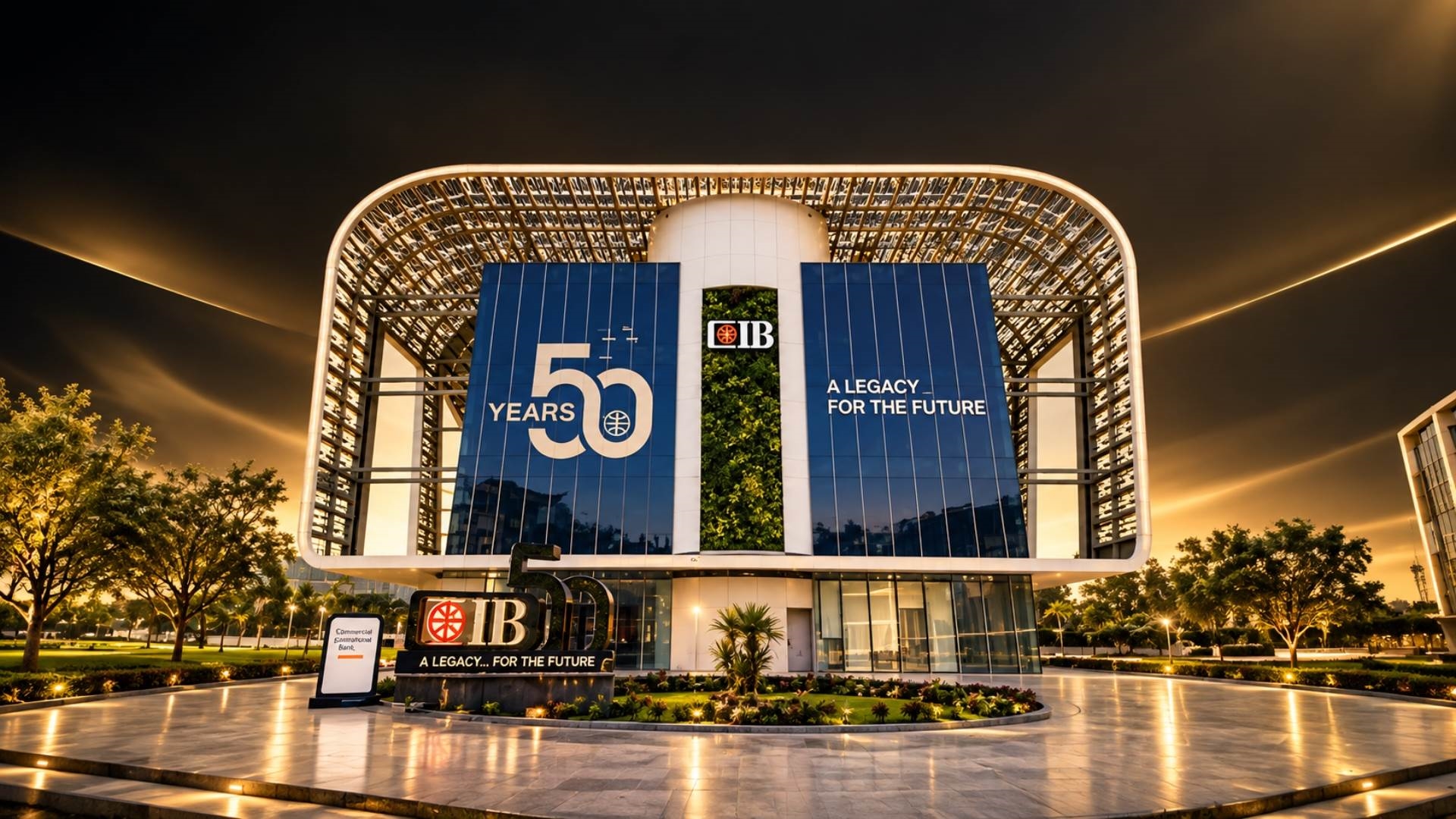
Commercial International Bank – Egypt (CIB) significantly expanded its credit activity in the first half of 2026, driven mainly by increased loans to corporates, alongside strong growth in retail loans.
According to the bank’s standalone financial statements, total customer loans rose to EGP 631.34bn at end-June 2026, compared with EGP 541.41bn at end-2025, a growth rate of 16.6 per cent and a total increase of EGP 89.94bn.
Corporate loans was the main driver of credit expansion in H1 2026. The corporate loan portfolio, including small loans for economic activities, grew by 17.6 per cent to EGP 527.99bn at end-June 2026, compared with EGP 449.13bn at end-2025, an increase of EGP 78.86bn.
Retail loan balances, meanwhile, rose to EGP 103.36bn at end-June 2026, compared with EGP 92.28bn at end-2025, a growth rate of 12 per cent and an increase of EGP 11.08bn.
Although both the corporate and retail segments grew, the sheer scale of corporate lending meant it contributed far more to the overall increase.
Corporate accounted for about 87.7 per cent of the total rise in customer loan balances in H1 2026, versus 12.3 per cent for retail, reflecting the central role of corporate loans in driving the bank’s credit growth during the period.
This performance was reflected in the corporate segment’s share of the total loan portfolio, which rose to about 83.6 per cent at end-June 2026, from 82.9 per cent at end-2025.
By contrast, the retail segment’s share of the total loan portfolio declined to about 16.4 per cent at end-June 2026, from 17.1 per cent at end-2025.
These indicators must be read alongside the quality of the loan portfolio, the primary measure for judging the efficiency and sustainability of credit expansion.
Growth in loan volumes is not, on its own, a measure of strong performance. Its quality ultimately depends on disciplined risk management and adherence to creditworthiness standards, as aggressive lending can drive up defaults and turn near-term growth into longer-term pressure.
Against this backdrop, the non-performing loan (NPL) ratio improved to 1.61 per cent at end-June 2026, from around 1.78 per cent at end-2025.
Overall, CIB’s performance in H1 2026 reflects the pivotal role of the corporate segment in driving credit growth, together with an improvement in the NPL ratio.
This highlights the importance of balancing corporate lending expansion with maintaining loan portfolio quality, which supports sustainable credit growth and a more efficient portfolio in the coming periods.