Emirates NBD Egypt’s five-year transformation reshapes growth, profitability
Yasmin Elsayed
Translated & Edited by Aya Elsayed
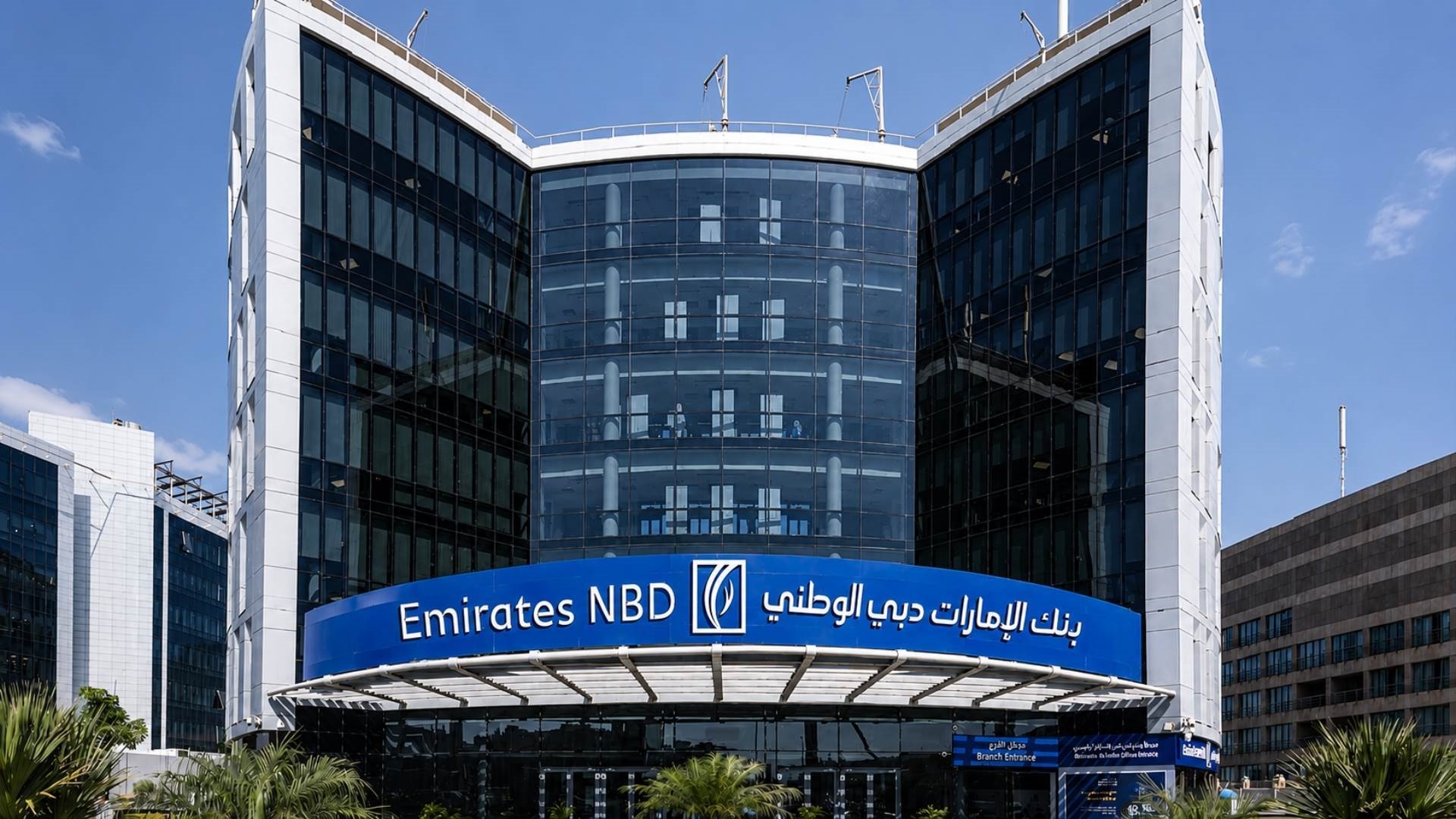
Emirates NBD Egypt has recorded substantial business growth over the past five years, strengthening its financial position as total assets more than doubled, driven primarily by strong growth in customer deposits.
The expansion extended beyond the balance sheet, with net profit rising more than elevenfold alongside a marked improvement in profitability indicators.
Total assets increased to EGP 247.63 billion at end-June 2026 from EGP 82.58 billion at end-2021, representing growth of 200 per cent and an increase of about EGP 165 billion. This points to a substantial expansion in the bank’s overall scale of operations rather than growth concentrated in a single balance-sheet item.
Customer deposits were the main funding driver of this expansion, rising 184.2 per cent to EGP 192.04 billion at end-June 2026 from EGP 67.58 billion at end-2021, an increase of EGP 124.46 billion.
Measured against the overall increase in assets, deposit growth was equivalent to about 75.4 per cent of the expansion in the balance sheet, underlining the central role of deposit mobilisation in building the bank’s larger business base.
Despite this, the bank’s relative reliance on deposits declined, with deposits accounting for 77.55 per cent of assets at end-June 2026 compared with 81.84 per cent at end-2021.
This reflects a broader funding base as the balance sheet expanded, reducing the relative concentration of funding in deposits while leaving them as the bank’s largest source of funding.
Equity grew at an even faster pace, rising 212 per cent to EGP 25.07 billion at end-June 2026 from EGP 8.04 billion at end-2021, an increase of EGP 17.03 billion.
This growth is particularly significant from a banking perspective because it accompanied the sharp expansion in assets and lending, strengthening the bank’s capacity to absorb risk and continue growing without relying solely on higher liabilities.
Although equity remained a relatively limited source of asset funding compared with deposits, its contribution increased to 10.13 per cent at end-June 2026 from 9.73 per cent at end-2021.
Balances due from banks also increased sharply, reaching EGP 21.95 billion at end-June 2026 from EGP 2.81 billion at end-2021, representing exceptional growth of about 680 per cent and an increase of EGP 19.13 billion.
This reflects a substantial increase in balances placed with the banking sector and highlights the importance of managing the liquidity and asset-allocation mix alongside the expansion in the deposit base.
On the asset-allocation side, the bank expanded its core banking activity, with net customer loans rising 176.3 per cent to EGP 107.84 billion at end-June 2026 from EGP 39.03 billion at end-2021, an increase of EGP 68.81 billion.
At the same time, the bank did not rely solely on lending to deploy its resources. Financial investments rose 186.4 per cent to EGP 81.25 billion at end-June 2026 from EGP 28.37 billion at end-2021, an increase of EGP 52.89 billion.
The expansion of the balance sheet was accompanied by a much stronger increase in earnings. Net profit rose to EGP 6.08 billion in 2025 from EGP 544.73 million in 2021, an increase of about 1,016.6 per cent, meaning profit grew more than tenfnfold over the period.
This indicates that the bank not only expanded the scale of its business, but also increased its ability to generate profit at a pace well above the growth of its balance sheet.
The improvement was reflected in profitability indicators. Based on average opening and closing balances, return on average assets (ROAA) rose to 3.32 per cent in 2025 from about 0.73 per cent in 2021, while return on average equity (ROAE) increased to 30.12 per cent from about 6.91 per cent over the same period.
These increases point to a significant improvement in the bank’s ability to generate returns from its asset and equity bases, showing that stronger profitability was not driven solely by a larger pool of resources but also by a higher level of returns generated from them.
The strong performance continued into 2026, with the bank reporting net profit of EGP 3.31 billion in H1, alongside ROAA of 2.91 per cent and ROAE of 27.52 per cent.
Emirates NBD Egypt’s indicators over the past five years show that the transformation extended beyond business volume expansion to the bank’s ability to mobilise resources, deploy them, and generate stronger returns. Assets, deposits, and equity all recorded strong growth alongside expansion in lending and financial investments, clearly reshaping the bank’s business base.
The transformation also extended to profitability, which recorded a significant improvement, reflecting simultaneous growth in both the scale of the bank’s operations and its ability to generate returns from its business base.
The past five years have therefore produced a broader financial base, supported by stronger resources, substantial expansion in lending and financial investments, and a larger equity base, strengthening the bank’s capacity to sustain growth in the next phase.