First Bank tracks MENA’s top 20 banks, QNB Group leads

The 20 largest banks in the Middle East and North Africa (MENA) retained their positions at end-June 2026, although several banks shifted positions as relatively close asset levels made modest differences in growth enough to reshape the ranking.
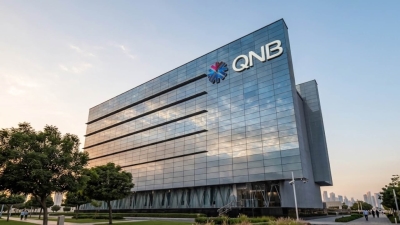
H1 2026 data show that competition at the top of the MENA banking sector has become more sensitive, with QNB Group reclaiming first place after its assets rose by around 3.7 per cent to USD 394.72 billion at end-June, from USD 380.67 billion at end-2025.
QNB Group’s return to the top came at the expense of First Abu Dhabi Bank, which slipped to second place.
First Abu Dhabi Bank (FAB) recorded a more moderate 0.4 per cent increase in assets over the same period, reaching USD 383.57 billion at end-June 2026, compared with USD 382.23 billion at end-2025.
The growth was not enough to retain first place given the faster expansion of its rival.
Emirates NBD recorded the fastest growth rate among the top 20, with its assets rising 13.6 per cent in the first six months of 2026 to USD 360.08 billion at end-June, from USD 317.04 billion at end-2025, pushing the bank up from fourth to third place.
As a result, Saudi National Bank (SNB) slipped to fourth place at end-June 2026 from third at end-2025, despite recording asset growth of around 2.7 per cent over the same period to USD 331.28 billion, from USD 322.61 billion. However, its growth rate was lower than that recorded by Emirates NBD.
Al Rajhi Bank remained fifth, with assets of USD 280.73 billion at end-June 2026, compared with USD 278.15 billion at end-2025, representing half-year growth of 0.93 per cent.
Abu Dhabi Commercial Bank (ADCB) rose to sixth place at end-June, from seventh at end-2025, supported by a 7.7 per cent half-year increase in assets to USD 226.86 billion, compared with USD 210.64 billion.
Ziraat Bankası slipped one place to seventh after its assets edged down 0.1 per cent in H1 2026 to USD 216.48 billion at end-June, from USD 216.66 billion at end-2025.
National Bank of Egypt (NBE) remained eighth, with assets of USD 197.98 billion at end-June 2026.
National Bank of Kuwait (NBK) retained ninth place, with assets reaching USD 150.16 billion at end-June, compared with USD 148.14 billion at end-2025, representing growth of 1.4 per cent in the first half of this year.
Riyad Bank entered the Middle East and North Africa’s top 10, rising to tenth place at end-June from eleventh at end-2025, after its assets increased by around 2.6 per cent on a half-year basis to USD 142.03 billion, from USD 138.50 billion.
Kuwait Finance House (KFH) slipped one place to eleventh at end-June 2026 from tenth at end-2025, after its assets fell by around 1.3 per cent on a half-year basis to USD 137.11 billion, from USD 138.88 billion.
From twelfth to twentieth place, the ranking showed greater stability, with changes limited to two banks swapping positions, while the remaining banks held their rankings unchanged.
Türkiye İş Bankası rose to twelfth place at end-June 2026 from thirteenth at end-2025, supported by a 2.7 per cent half-year increase in assets to USD 128.87 billion, from USD 125.45 billion.
VakıfBank slipped to thirteenth place from twelfth after its assets declined by around 0.3 per cent on a half-year basis to USD 127.43 billion at end-June 2026, from USD 127.87 billion at end-2025.
Saudi Awwal Bank (SAB) remained fourteenth, with assets reaching around USD 126.28 billion at end-June 2026, compared with USD 121.16 billion at end-2025, representing half-year growth of 4.2 per cent.
Dubai Islamic Bank (DIB) retained fifteenth place, with assets reaching around USD 115.22 billion at end-June 2026, compared with USD 113.25 billion at end-2025, representing half-year growth of 1.7 per cent.
Türkiye Halk Bankası remained sixteenth, with assets of USD 106.75 billion at end-June 2026, compared with USD 104.68 billion at end-2025, representing growth of 2 per cent in the first six months of 2026.
Mashreq retained seventeenth place, with assets reaching USD 99.59 billion at end-June, compared with USD 91.11 billion at end-2025, representing half-year growth of 9.3 per cent.
Banque Misr remained eighteenth, with assets of USD 94.98 billion at end-June 2026.
Attijariwafa bank also retained nineteenth place, with assets reaching USD 87.94 billion at end-June, compared with USD 87.23 billion at end-2025, representing marginal half-year growth of 0.8 per cent.
Alinma Bank remained twentieth, with assets reaching USD 87.64 billion at end-June 2026, compared with USD 82.93 billion at end-2025, representing growth of 5.7 per cent in H1 2026.
These movements confirm that competition among the largest banks in the MENA no longer depends solely on the scale of their assets, but increasingly on the pace of growth achieved.
Modest differences in performance are now sufficient to drive clear changes in bank rankings, particularly given the close asset sizes of the region’s largest banking institutions.