From acquisition to expansion: KFH–Egypt reshapes growth
Shimaa Nasser
Translated & Edited by Aya Elsayed
Kuwait Finance House’s (KFH) acquisition of Ahli United Bank Group in September 2022 marked a turning point for Ahli United Bank – Egypt.
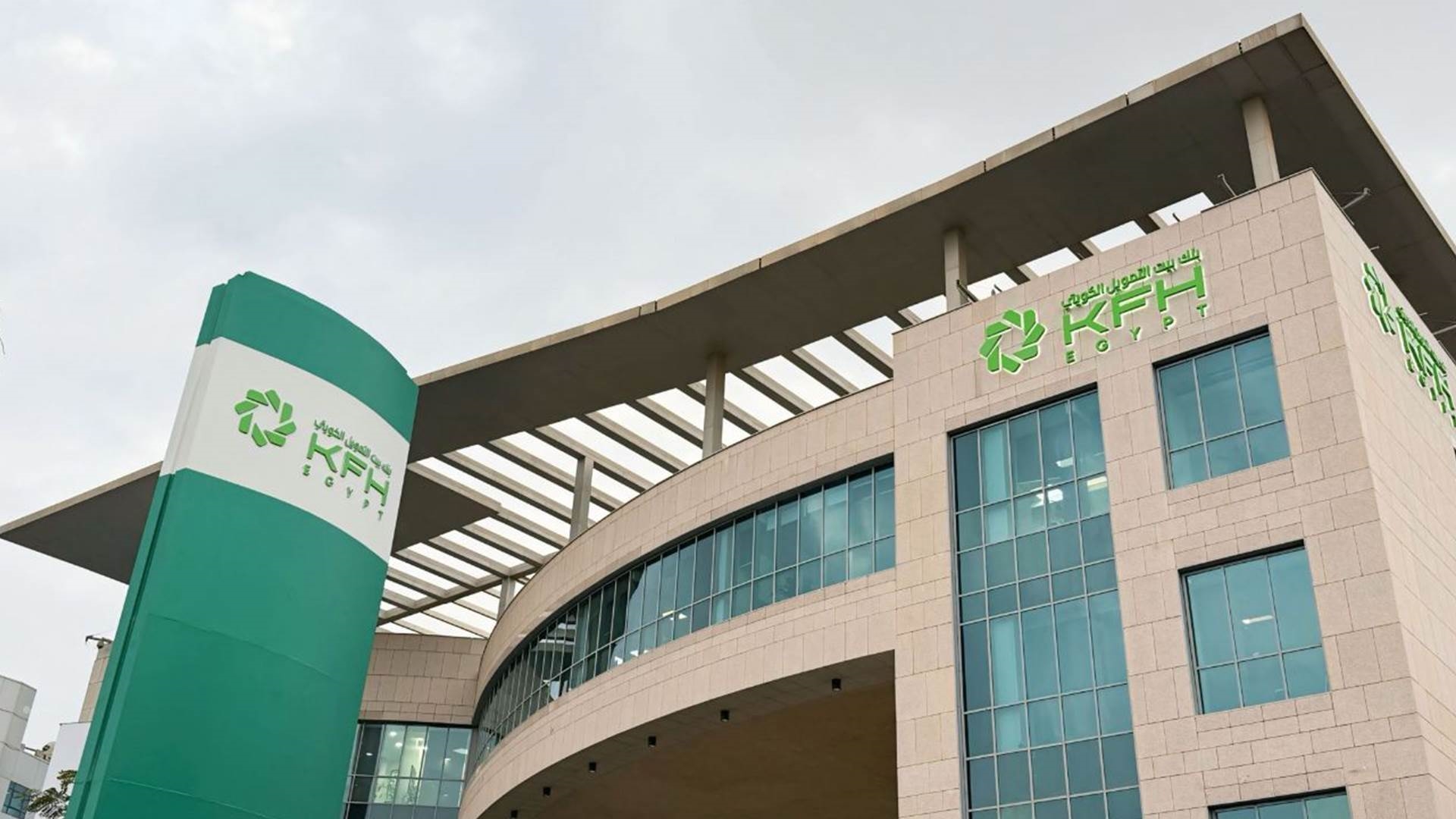
The bank subsequently adopted a Sharia-compliant banking model in September 2024 and was officially renamed Kuwait Finance House – Egypt (KFH–Egypt) in January 2025.
Between end-2022 and June 2026, the bank underwent more than a change in ownership and identity, as its balance sheet expanded, the weight of its customer segments shifted, and the relationship between the resources it mobilises and the uses to which they are deployed was reshaped.
The comparison between the bank’s position at end-2022 and June 2026 shows a transformation that went beyond doubling the size of its balance sheet. Total assets rose 117.4 per cent to EGP 185.90bn at end-June 2026, from EGP 85.49bn at end-2022.
Deposits grew at a faster pace, surging 162.6 per cent to EGP 149.93bn at end-June 2026, from EGP 57.09bn at end-2022. Corporate deposits rose 136.2 per cent to EGP 101.68bn from EGP 43.06bn, while retail deposits jumped 243.9 per cent to EGP 48.25bn from EGP 14.03bn. As a result, retail’s share of total deposits increased to 32.2 per cent from 24.6 per cent.
Financing increased 124.9 per cent to EGP 120.31bn at end-June 2026, compared with EGP 53.50bn at end-2022. Corporate financing rose 110.1 per cent to EGP 105.88bn from EGP 50.39bn, while retail financing surged 364.8 per cent to EGP 14.43bn from EGP 3.10bn. This lifted retail financing’s share of total financing to 12 per cent from 5.8 per cent.
The data reveal a more nuanced pattern of growth. Individual customers emerged as the bank’s fastest-growing segment, but not its centre of gravity. Corporates still account for around 68 per cent of deposits and 88 per cent of financing, underlining their enduring role as the bank’s core business base.
The shift is significant because it is evident on both sides of the balance sheet. The bank not only attracted individual deposits at a rapid pace but also expanded financing to this segment even faster. This points to a gradual deepening of its retail franchise, rather than an isolated increase in balances on either side of the balance sheet.
The loan-to-deposit ratio declined to around 80.2 per cent in June 2026 from 93.7 per cent at end-2022. Over the period, the bank added EGP 92.84bn to customer deposits, compared with EGP 66.82bn in financing. Although the financing portfolio more than doubled, deposits expanded faster, providing greater scope to manage liquidity and allocate it across different uses.
Financial investments reinforce this reading, rising 109.6 per cent to EGP 35.56bn at end-June 2026 from EGP 16.97bn at end-2022. The increase in resources was not absorbed by financing alone but also flowed into other asset classes.
The comparison therefore points to a different challenge: no longer simply expanding the resource base, but deploying it more efficiently to generate productive assets.
Shareholders’ equity expanded alongside the bank’s business, rising 121.2 per cent to EGP 23.28bn at end-June 2026 from EGP 10.52bn at end-2022. Its share of total assets remained broadly unchanged, representing around 12.3 per cent at end-2022 and 12.5 per cent at end-June 2026.
This frames the next phase of the bank’s development. The post-acquisition years demonstrated its capacity to expand the balance sheet, strengthen its resource base, and increase the contribution of retail customers, while preserving corporates as a core pillar.
The decline in the loan-to-deposit ratio, however, shifts the question for the period ahead: not how much further the bank can grow, but how effectively it can convert the growth already achieved into higher productivity.
The expansion extended beyond the balance sheet to the bank’s earnings capacity. Net profit more than doubled over the period, rising 103.5 per cent to EGP 4.08bn in 2025 from EGP 2.01bn in 2022.
The improvement was underpinned by growth across the bank’s core income streams. Net interest income surged 152.0 per cent to EGP 7.64bn in 2025 from EGP 3.03bn in 2022, while net fees and commission income increased 71.4 per cent to EGP 849.5m from EGP 495.6m.
Net interest income remained the principal driver of the bank’s income growth over the period.
Growth productivity test
Overall, the comparison shows that the acquisition was followed by a gradual reconfiguration of the bank’s business profile, rather than simply an expansion in scale. The bank's resource base grew faster than financing, the retail segment gained greater prominence and delivered faster growth, while corporates retained their position as the foundation of the bank’s business.
The bank has therefore established a broader and more diversified platform for growth without diluting its corporate focus.
The next phase will test KFH–Egypt's ability to raise the productivity of that growth by deploying its resources more efficiently, turning its retail expansion into sustainable business and preserving the strength of its corporate portfolio.
The post-acquisition period laid a wider foundation for growth. The next phase will determine the bank’s ability to translate that foundation into a sustainable competitive advantage.