QNB Regains Top Spot as MENA's Largest Bank
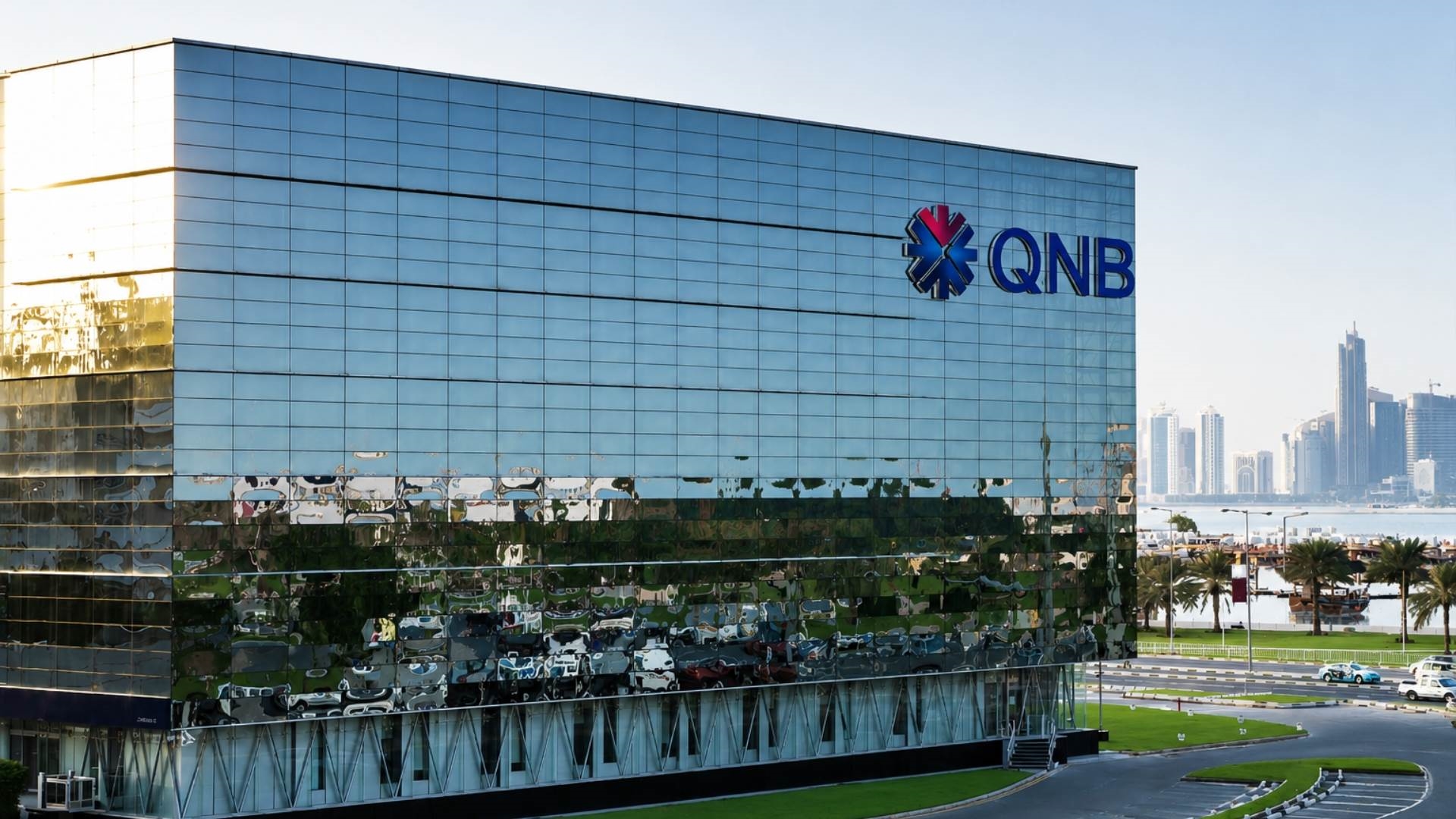
A recent analysis by the «First Bank» Research Center showed that Qatar National Bank (QNB) regained its position as the largest bank in the Middle East and North Africa (MENA) by total assets at the end of June 2026, after spending two consecutive quarters behind First Abu Dhabi Bank (FAB), which had overtaken it in September 2025.
The shift underscores intensifying competition for regional banking leadership, with the top ranking becoming increasingly fluid as the asset bases of the region's two largest lenders continue to converge.
According to the banks' consolidated financial statements, QNB's total assets rose to $394.72 bn at the end of June 2026 from $380.67 bn at the end of 2025, representing a 3.7% increase during the first half of the year.
By comparison, FAB's assets edged up to $383.57 bn from $382.23 bn over the same period, posting growth of just 0.3%, The difference in growth momentum was enough to reverse the regional rankings.
The turning point came during the second quarter of 2026, when the two banks moved in opposite directions. While QNB continued to expand its balance sheet, FAB's assets declined from their March level, allowing the Qatari lender to reclaim the top position within just three months.
At the end of March 2026, FAB had strengthened its lead with total assets of $405.78 bn, standing $18.87 bn ahead of QNB, whose assets totaled $386.91 bn. By the end of June, however, QNB had erased that gap entirely and moved back into first place with a lead of $11.15 bn.
A review of the past five years shows that QNB had maintained a comfortable lead over its nearest rival for much of the period.
The asset gap stood at $31.36 bn at the end of both 2020 and 2021, narrowed to $24.41 bn in 2022 and $19.86 bn in 2023, before widening again to $25.78 bn at the end of 2024, reinforcing its long-standing regional dominance.
That pattern changed in 2025, when FAB became the region's largest bank by assets for the first time, ending the year with a $1.56 bn lead before extending its advantage to $18.87 bn by the end of March 2026.
However, QNB reversed the trend within one quarter, marking one of the fastest leadership changes ever recorded between the region's two largest banking groups. The latest figures suggest that the rivalry between QNB and FAB has entered a new phase.
Regional leadership is no longer defined solely by the size of a bank's balance sheet but increasingly by its ability to deliver stronger and more sustainable growth than its closest competitor.
As the gap between the two lenders continues to narrow, upcoming financial results are likely to play a decisive role in reshaping the ranking of the region's largest banks.