Decision-Makers: How Hala Sadek led Kuwait Finance House – Egypt into a new era
The challenges facing banking leaders extend beyond achieving growth and expanding business operations to managing major institutional transformations, particularly those involving changes in ownership, identity, and business models, while maintaining operational continuity and creating new growth opportunities.
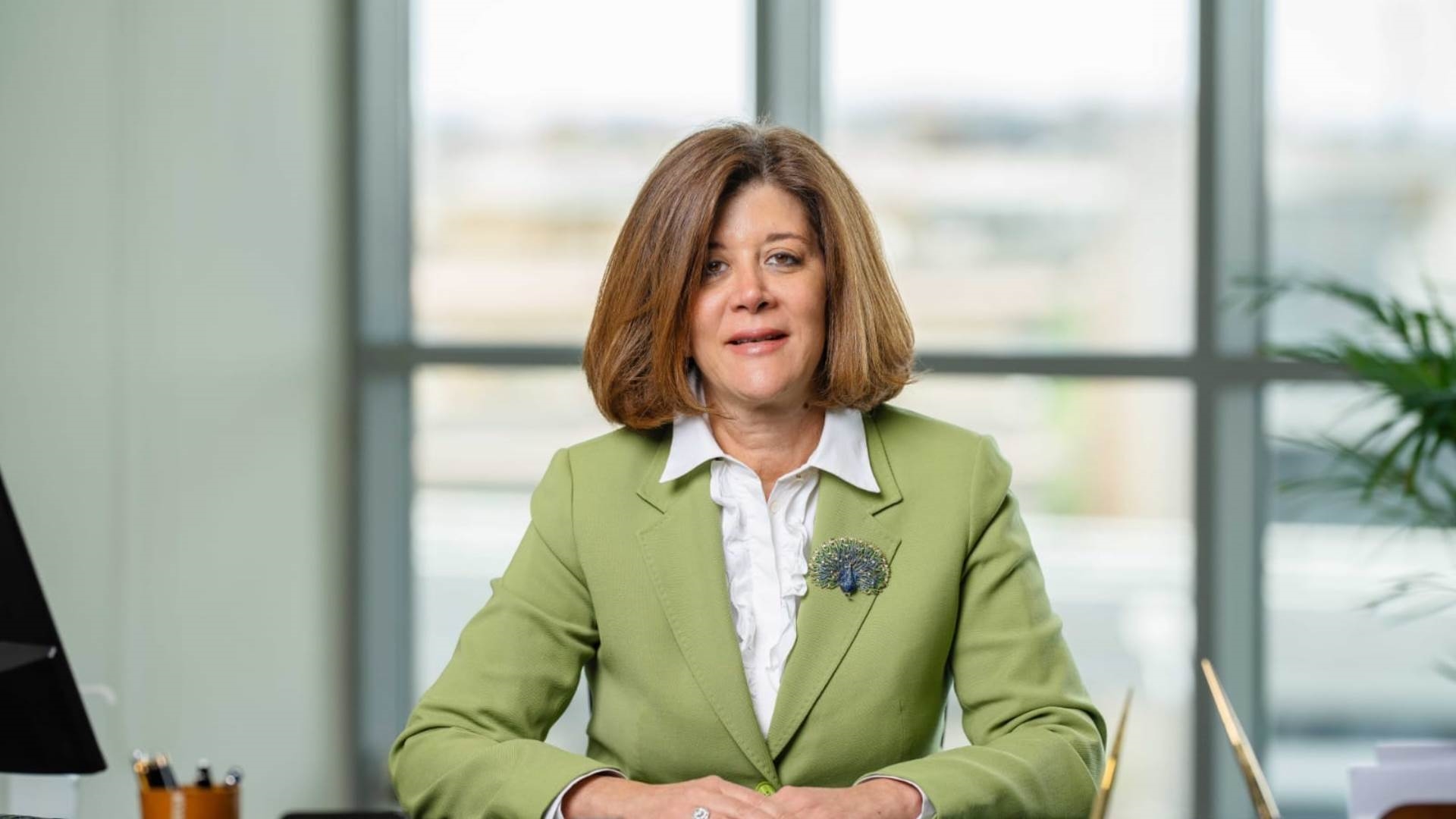
The experience of Hala Sadek, CEO and Board Member of Kuwait Finance House – Egypt (KFH), reflects a leadership model during a pivotal phase in the bank’s history, combining business stability with expansion and a reshaping of its banking strategy.
With more than 35 years of banking experience, Sadek began her career at Commercial International Bank (CIB) in 1989, progressing through several leadership positions before joining Ahli United Bank – Egypt in 2006 and becoming CEO in November 2020.
A major milestone in her career came with Kuwait Finance House Group’s acquisition of Ahli United Bank Group in October 2022. This was followed by the conversion of Ahli United Bank – Egypt’s operations to Islamic banking in September 2024, culminating in the launch of its new identity as Kuwait Finance House – Egypt in January 2025.
The bank’s development extended beyond changing its identity, as it moved to strengthen its retail banking and digital payments services. One notable step was signing a strategic partnership with Visa in October 2025 to develop payment solutions, cards, and digital banking services.
However, the main test of this phase lies not merely in completing the institutional transformation, but in what the figures reveal about business growth, financing quality, and profitability. First Bank examines the bank’s key indicators from end-2022 through June 2026.
Assets more than double as corporates drive deposit growth
Expansion in the balance sheet was one of the most prominent features of the period following the acquisition, with Kuwait Finance House – Egypt’s assets increasing by 117.4 per cent to EGP 185.90bn at end-June 2026, compared with EGP 85.49bn at end-2022.
This represented an overall increase of EGP 100.41bn. Deposit growth was one of the main drivers of this expansion, rising by 114.8 per cent to EGP 149.93bn at end-June 2026.
This compared with EGP 69.80bn at end-2022, representing an increase of EGP 80.13bn. However, the significance of this growth extends beyond the volume of additional resources to the customer segments driving the expansion.
Retail deposits surged by 243.9 per cent to EGP 48.25bn at end-June 2026, compared with EGP 14.03bn at end-2022, representing an increase of EGP 34.22bn.
Meanwhile, corporate deposits increased by 136.2 per cent to EGP 101.68bn, compared with EGP 43.06bn, marking an increase of EGP 58.62bn.
These results highlight the expansion of the bank’s business base across both retail and corporate segments, with retail deposits recording the faster growth rate, while corporates generated the largest absolute increase.
Corporates lead financing growth as retail gains ground
While deposit growth expanded the bank’s available funding base, the development of its financing portfolio demonstrates its ability to channel these resources into broader banking activity, alongside its transition to an Islamic banking model.
Total customer financing surged by 124.9 per cent to EGP 120.31bn at end-June 2026, compared with EGP 53.50bn at end-2022, representing an increase of EGP 66.82bn.
Corporates led this expansion, with their financing increasing by 110.1 per cent to EGP 105.88bn at end-June 2026, compared with EGP 50.39bn at end-2022, representing an increase of EGP 55.49bn.
This accounted for approximately 83 per cent of the total increase in the financing portfolio, highlighting the dominant contribution of corporates to the bank’s financing expansion throughout the period.
However, the most notable shift came from the retail segment, which recorded growth of 364.8 per cent, with its financing portfolio reaching EGP 14.43bn at end-June 2026, compared with EGP 3.10bn at end-2022.
Consequently, retail’s share of total financing increased to 11.99 per cent, compared with 5.80 per cent, reflecting a stronger contribution from this segment to the bank’s overall financing portfolio.
The changes were not limited to financing volumes and their distribution, as the financing-to-deposit ratio increased to 80.24 per cent at end-June 2026, compared with 76.64 per cent at end-2022.
These developments indicate a gradual shift in the financing structure, with corporates continuing to account for the largest share of the portfolio, alongside an expanding retail contribution and a higher proportion of resources allocated to financing.
Portfolio quality faces the test of credit expansion
The expansion in financing alone is insufficient to assess the strength of growth, as portfolio quality remains one of the key indicators of the bank’s ability to expand while maintaining risk levels under control.
In this regard, the financing portfolio quality ratio increased to 96.74 per cent at end-June 2026, compared with 96.36 per cent at end-2022, reflecting an improvement in the portfolio’s overall quality.
This indicates that Stage 3 financing accounted for 3.26 per cent of the total portfolio, compared with 3.64 per cent, alongside an increase of 124.9 per cent in total financing.
This performance is particularly significant as credit expansion was not accompanied by an increase in the proportion of non-performing financing compared with end-2022, indicating a degree of balance between business growth and risk management.
Nevertheless, maintaining asset quality remains a key challenge as the bank continues to expand its financing activities, particularly amid the growing size of its overall portfolio and customer base.
Profits more than double as income streams reflect business expansion
The expansion of Kuwait Finance House – Egypt’s business also extended to profitability indicators, with net profit increasing by 103.5 per cent to EGP 4.08bn in 2025, compared with EGP 2.01bn in 2022.
This represented an increase of EGP 2.08bn. The growth was supported by a 152 per cent increase in net income from return, which reached EGP 7.64bn in 2025, compared with EGP 3.03bn in 2022.
Meanwhile, net income from fees and commissions rose by 71.4 per cent to EGP 849.49mn, compared with EGP 495.59mn over the same period, reflecting the expansion of the bank’s non-financing income streams.
The bank continued to strengthen its profitability during H1 2026, recording net profit of EGP 2.11bn, compared with EGP 1.77bn in the corresponding period of 2025, marking growth of 19.2 per cent.
Notably, net income from fees and commissions recorded faster growth than net income from return during H1 2026, increasing by 39.2 per cent, compared with 18.8 per cent, reflecting the growing contribution of banking services to income growth.
Regarding profitability indicators, the return on average assets reached 2.36 per cent during H1 2026, while the return on average equity stood at 18.57 per cent, highlighting the bank’s profitability performance.
These indicators highlight another dimension of the challenges facing the bank during this phase. Following substantial business expansion and stronger profits, maximising returns on its growing asset and equity bases has become increasingly important.
This makes improving operating efficiency and maintaining sustainable profitability essential priorities as the bank continues to build on its expanded business base and strengthen its competitive position.
From transformation to sustainable growth
Kuwait Finance House – Egypt’s experience under Hala Sadek’s leadership reflects a phase that extended beyond changing its commercial identity to reshaping its strategic direction and expanding operations alongside the transition to a new banking model.
With its transition to Islamic banking completed, the bank has entered a new phase focused on building on its achievements and capitalising on opportunities in the Egyptian market while maintaining a balance between growth and operational efficiency.
Accordingly, Hala Sadek’s leadership experience highlights how managing institutional transformation was not the end of the journey, but rather the beginning of a new phase for the bank and its future development.
Its future direction will depend on the bank’s ability to translate its expansion into sustainable growth, improve operational efficiency, and establish a stronger competitive position in the Egyptian banking market.